
A systematic review details memory-saving training strategies for large transformer models in scientific fields, including biomedical and medical imaging applications.
Key Details
- 1National University of Defense Technology researchers reviewed memory-efficient training for transformer-based models.
- 2Challenges addressed include the high GPU memory demands limiting broad scientific AI adoption.
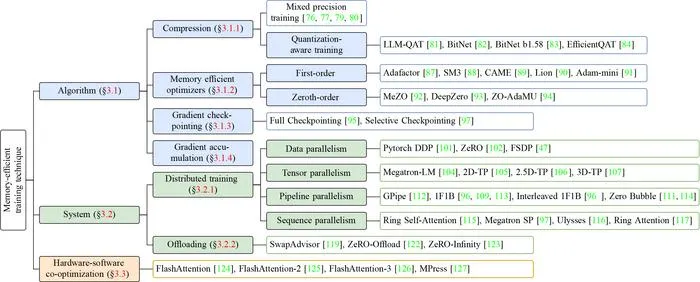
- 3Algorithm-level methods discussed: mixed-precision training, quantization, pruning.
- 4System-level methods: distributed training systems, ZeRO optimizer, memory swapping.
- 5Hardware–software co-design is explored to optimize efficiency for scientific workflows.
- 6AlphaFold 2 is highlighted as a case where chunking and gradient recomputation enable training long protein sequences.
Why It Matters
Large AI models are increasingly important in biomedical and medical imaging research, but memory constraints hinder practical deployment. This review maps out actionable strategies to reduce those barriers, broadening access to advanced AI across imaging-centric scientific fields.

Source
EurekAlert
Related News
•EurekAlert
Holographic Neural Network Achieves Multi-Task AI via Light-Based Computing
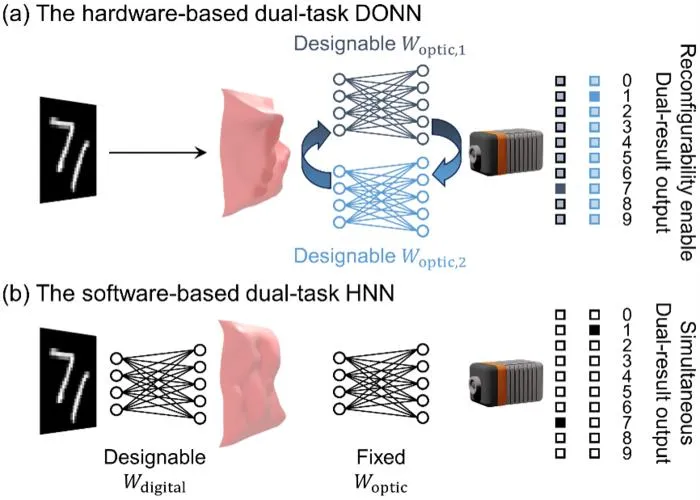
Researchers have developed a holographic neural network using optics to perform multiple AI classification tasks simultaneously without hardware reconfiguration.
•EurekAlert
Rethinking Multimodal Cardiovascular AI: When Models Should Defer Predictions
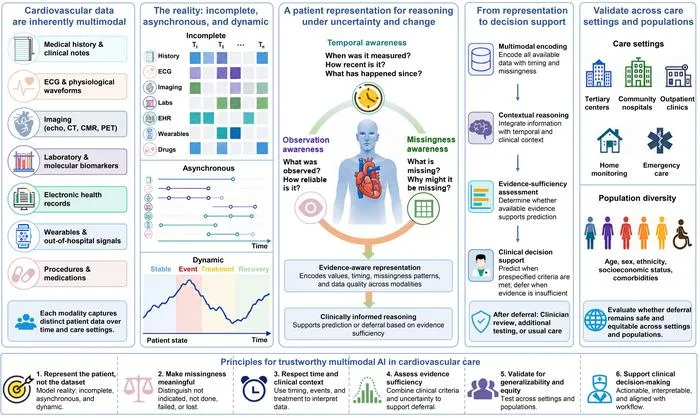
A commentary in Medicine Discovery argues cardiovascular AI models must learn to defer predictions when key modalities are missing, as missingness and asynchrony are clinical realities.

•EurekAlert
MSKAI Unveils AI Tool for Embryo Cell Analysis and Imaging-Driven Cancer Insights
MSK researchers employ AI and advanced imaging to reveal cancer mechanisms and track embryonic development at the single-cell level.