
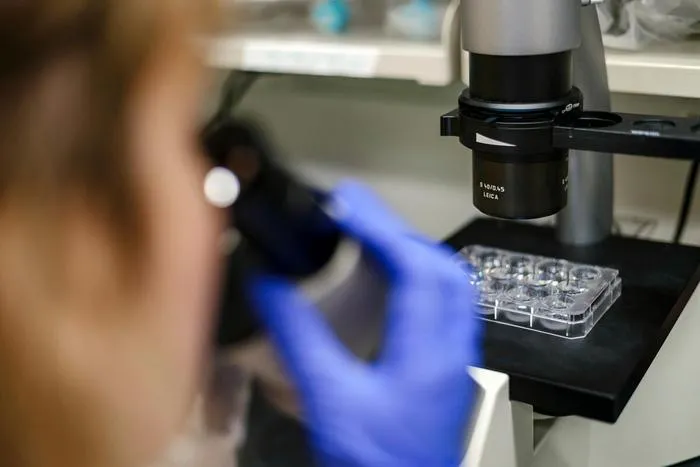
MSK researchers employ AI and advanced imaging to reveal cancer mechanisms and track embryonic development at the single-cell level.
Key Details
- 1MSK researchers developed 'Twin Attention,' an AI system to identify and analyze individual cells in 3D embryo imaging with 93–97% accuracy.
- 2AI tool drastically reduced manual review time for 700 C. elegans embryos to a few hours, detecting genes impacting crucial developmental steps.
- 3Advanced spatial metabolomics (imaging-based) uncovered how immune cells support triple-negative breast cancer growth by providing ornithine when glutamine is blocked.
- 4Macrophage metabolism targeting showed promise but depended on specific enzyme expression in tumor models, relevant for select patient subgroups.
- 5Other research highlights: New strategy for leptomeningeal metastases, ERBB2 mutations guiding breast cancer therapy, and tumor DNA profiling benefiting biliary tract cancers.
Why It Matters
AI-powered image analysis systems like Twin Attention accelerate and scale cell tracking in complex biological imaging, allowing new insights that would be impractical by hand. These findings highlight the growing impact of imaging AI in cancer and developmental bio-research, with future implications for diagnosis and treatment stratification.

Source
EurekAlert
Related News
•EurekAlert
New Study Urges 'Green AI' Practices in Medical Imaging and Healthcare
A new review highlights the urgent need for sustainable AI practices in healthcare, with emphasis on environmental impacts from applications like medical imaging.

•EurekAlert
AI-Driven Home Sensors Enable Privacy-Preserving Health Emergency Detection
Researchers have developed an AI-powered home monitoring system using radar and thermal sensors to detect health emergencies and support elderly independent living.
•EurekAlert
Spectra as Physical Tokens: A Framework for AI-Driven Discovery
A new framework proposes using spectra as 'physical tokens' to unify spectroscopy, machine learning, and automated science for materials discovery.