

A JMIR article examines the disconnect between AI legal requirements and actual patient comprehension in medical imaging and diagnostics.
Key Details
- 1The EU AI Act sets legal expectations for transparency in high-risk AI used in medical imaging and diagnostics.
- 2Current AI models are often too complex for meaningful, patient-facing explanations, creating an interpretability-accuracy trade-off.
- 3Automation bias can skew clinician decisions towards flawed AI outputs.
- 4A large proportion (22%–58%) of EU citizens struggle to understand health information, complicating AI explainability.
- 5The article calls for co-design with patients, institutional support, and standards for digital health literacy.
- 6Existing regulations alone are insufficient for delivering actionable explanations to patients.
Why It Matters
As AI becomes standard in radiology and diagnostics, genuine explainability is vital for patient trust and safety. Bridging the gap between legal compliance and effective communication is crucial to ensure patients can make informed choices about their care.

Source
EurekAlert
Related News
•EurekAlert
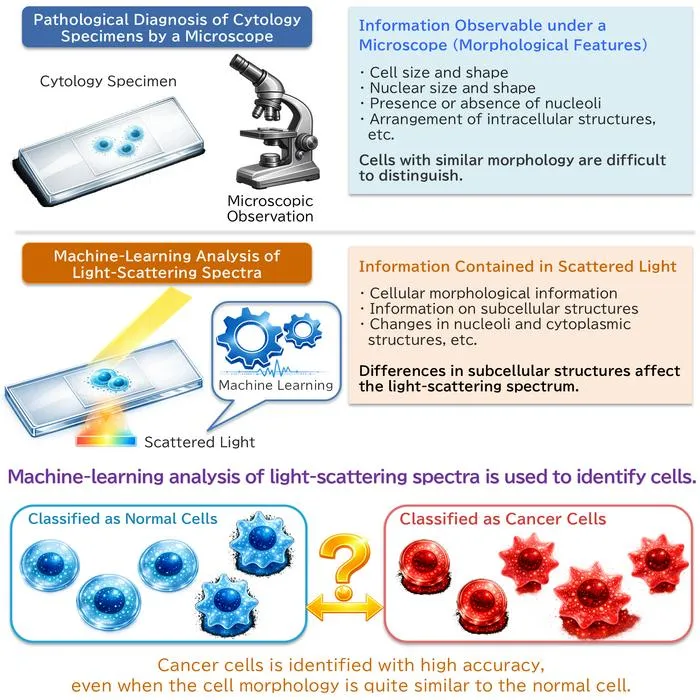
AI System Enhances Cancer Cell Detection via Light Scattering Spectra
Japanese researchers developed an AI system using light scattering spectra to improve cancer cell identification in cytology.

•EurekAlert
AI’s Potential to Expand, Not Shrink, the Clinical Workforce
AI advancements may lead to more, not fewer, healthcare jobs, challenging common fears about workforce reductions in specialties like radiology.

•EurekAlert
Rice University Aims to Revolutionize Imaging with Generative AI Cameras
Rice University receives NSF grant to develop AI-driven cameras that reconstruct images from minimal sensor data, promising advancements in efficient, intelligent imaging systems.