
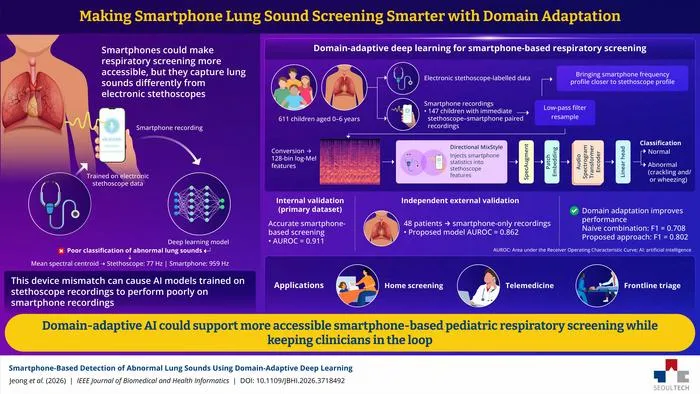
Researchers developed a domain-adaptive deep learning model enabling smartphones to detect abnormal lung sounds in children for remote screening.
Key Details
- 1Conventional auscultation requires in-person visits and stethoscopes; smartphone-based screening could enable remote respiratory monitoring.
- 2AI models trained on electronic stethoscope data struggle with smartphone audio due to acoustic differences.
- 3Researchers collected paired lung sound recordings from 611 children (electronic stethoscope), including 147 with smartphone audio, and an external cohort of 48 smartphone-only recordings.
- 4Their domain-adaptive framework preprocesses smartphone audio and uses a MixStyle module with an Audio Spectrogram Transformer backbone.
- 5The model achieved an F1 score of 0.802 and AUROC of 0.911 on smartphone data, outperforming models without domain adaptation.
- 6On independent validation, performance remained strong (F1 0.744, AUROC 0.862), indicating robust cross-device adaptation.
Why It Matters
This research presents a promising AI approach for accessible and scalable pediatric respiratory screening using widely available smartphones. Successful domain adaptation may broaden telehealth and home-based diagnostics, supporting clinicians and expanding respiratory disease detection in children.

Source
EurekAlert
Related News
•EurekAlert
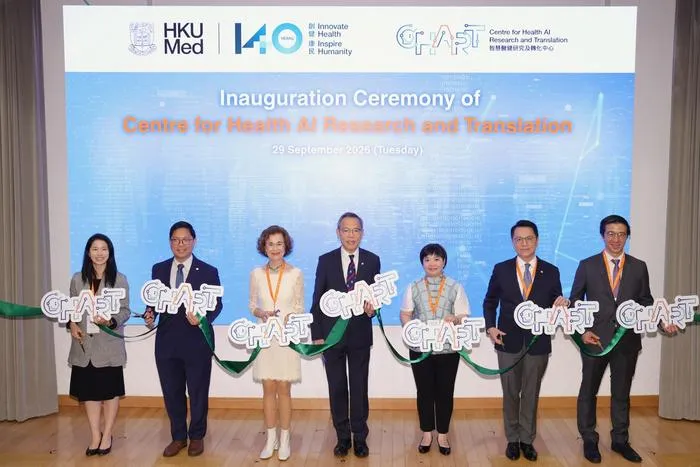
HKU Launches Centre for Health AI Research and Translation
The University of Hong Kong has established the Centre for Health AI Research and Translation (CHART) to drive trustworthy, patient-centered AI innovation in healthcare.
•EurekAlert
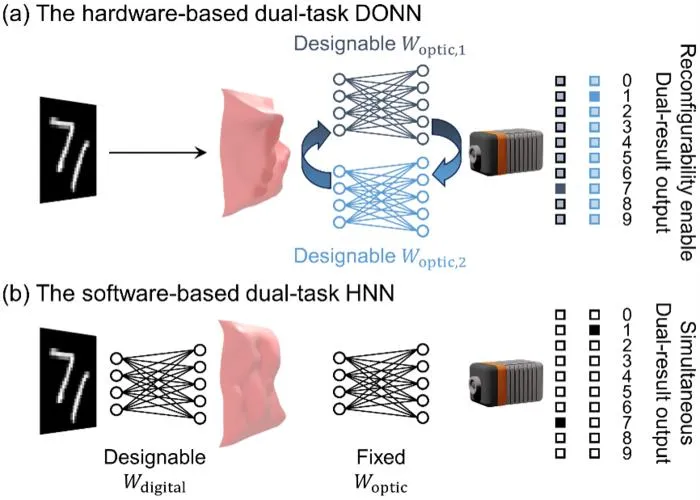
Holographic Neural Network Achieves Multi-Task AI via Light-Based Computing
Researchers have developed a holographic neural network using optics to perform multiple AI classification tasks simultaneously without hardware reconfiguration.
•EurekAlert
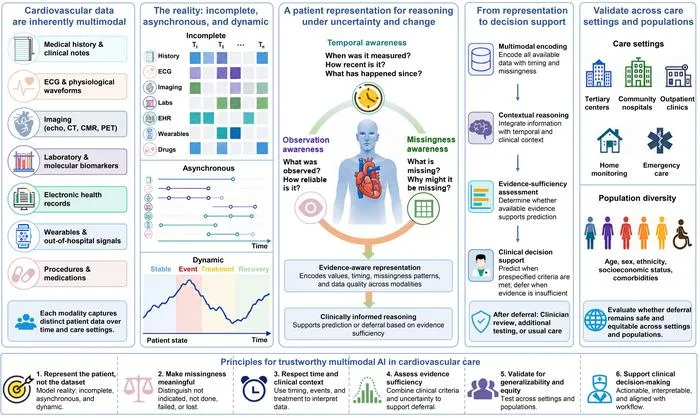
Rethinking Multimodal Cardiovascular AI: When Models Should Defer Predictions
A commentary in Medicine Discovery argues cardiovascular AI models must learn to defer predictions when key modalities are missing, as missingness and asynchrony are clinical realities.