
UC Santa Cruz engineers' 'future-guided' deep learning improves seizure prediction accuracy using EEG data.
Key Details
- 1'Future-guided learning' uses paired deep learning models—student and teacher—trained on different time horizons.
- 2Applied to EEG data, the approach raised seizure prediction accuracy by up to 44.8% on a patient-specific dataset.
- 3A generalization of the model still showed an 8.9% improvement over baselines using broader patient data.
- 4Tested on the Mackey-Glass mathematical benchmark, the method outperformed standard models by 23.4%.
- 5Researchers were inspired by brain function and see potential for personalized medicine and efficient wearable AI devices.
Why It Matters
This research points toward more accurate, patient-specific AI tools for real-time seizure prediction, leveraging brain wave data. Such deep learning innovations could be adapted for other time-varying biomedical data, ushering in more effective, energy-efficient diagnostic devices for neurology and beyond.

Source
EurekAlert
Related News
•EurekAlert
MRI Study Reveals Disease Epicenters Driving Atrophy in Multiple Sclerosis
Large-scale MRI analysis identifies specific brain regions acting as epicenters of atrophy in multiple sclerosis patients.
•EurekAlert
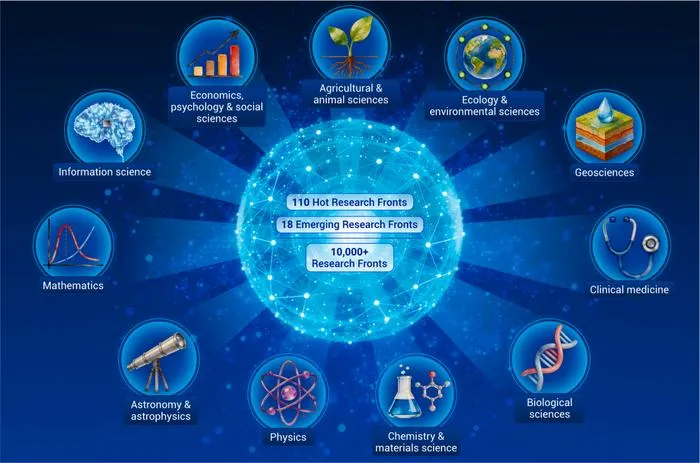
AI Now Drives Major Advances Across Scientific Fields, Report Finds
A comprehensive global analysis reveals AI as a cross-disciplinary engine, notably powering radiology and diagnostic innovations.
•EurekAlert
AI Combines CT and Pathology to Predict Esophageal Cancer Survival
A new AI framework (MENISA) combines CT scans, digital pathology, and tumor microenvironment data to predict survival risk for esophageal squamous cell carcinoma.