
UC Irvine researchers developed a physics-guided AI method to more accurately reconstruct cardiovascular fluid flow from imaging data that is sparse or noisy.
Key Details
- 1The PMPG-NN framework combines neural networks with the fundamental principle of minimum pressure gradient for reconstructing fluid flow fields.
- 2Potential applications include echocardiography-based particle image velocimetry (Echo-PIV) and 4D Flow MRI for better cardiac blood flow visualization.
- 3The study validated the approach on benchmark fluid-mechanics problems, showing improved accuracy especially for noisy or limited data.
- 4The approach can estimate features beyond direct imaging resolution, enabling enhanced understanding of complex flow patterns.
- 5Future work will focus on validating the method with experimental and clinical cardiovascular imaging data.
Why It Matters
This research could lead to more accurate, physically consistent analyses of cardiovascular blood flow using existing imaging modalities, potentially improving diagnostic confidence and understanding of complex cardiac conditions without new imaging hardware.

Source
EurekAlert
Related News
•EurekAlert
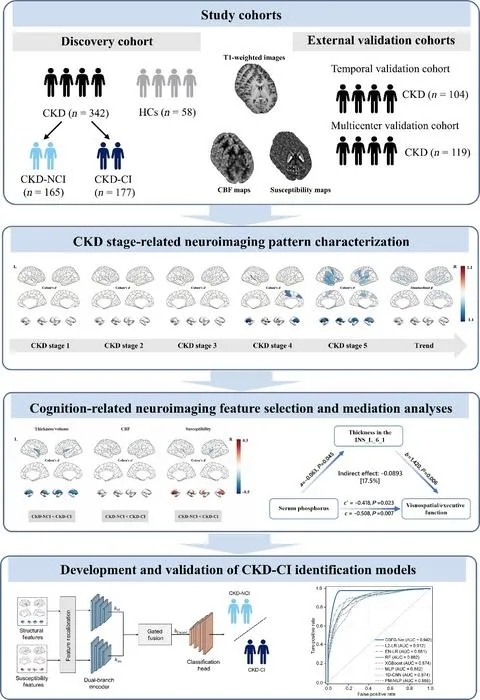
Deep Learning and MRI Identify Cognitive Impairment in CKD Patients
Researchers used multimodal MRI and a novel deep learning model to identify cognitive impairment in chronic kidney disease patients with strong validation.
•EurekAlert
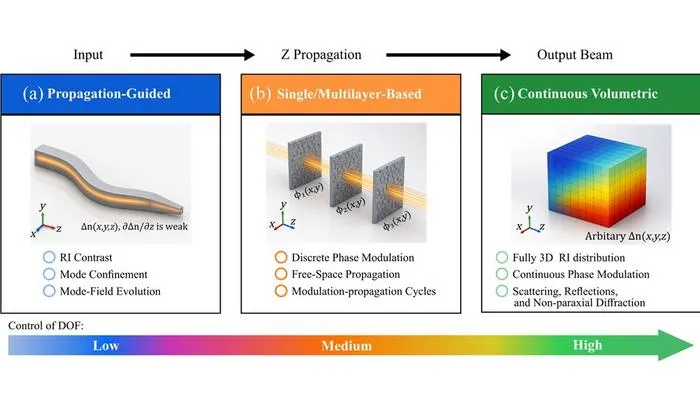
Advances in 3D-Printed Devices for Structured-Light Imaging
Researchers review femtosecond laser 3D microfabrication for integrated structured-light optical devices.

•EurekAlert
Deep Learning Tool Predicts DBS Outcomes in Dystonia via MRI
Researchers developed a deep learning algorithm (DystoniaDBSNet) that uses MRI scans to predict which dystonia patients will benefit from deep brain stimulation (DBS) surgery.