
The 2025 NFCR Global Summit spotlighted AI's expanding impact from cancer research to patient care, with experts highlighting breakthroughs in imaging, pathology, and multi-modal analytics.
Key Details
- 1The summit was held October 24, 2025, convening leaders in oncology, technology, and biomedical innovation.
- 2Key sessions addressed AI-driven advances in digital pathology, radiology analytics, molecular avatars, and digital twins for personalized treatments.
- 3Speakers emphasized the importance of high-quality data, diversity, and the need for responsible deployment of AI tools.
- 4Panels explored AI for early detection, risk prediction using multi-modal data, and 'uncertainty-aware' diagnostic algorithms.
- 5Regulatory and ethical challenges were discussed, with calls for collaboration and establishing robust guardrails for responsible AI use.
- 6The human touch in cancer care was repeatedly emphasized—AI as an augmentation rather than a replacement for clinician judgment.
Why It Matters
With AI shaping detection, diagnosis, and treatment pathways in oncology—including in radiology and imaging analytics—this summit reflects the field's urgent need to balance technological potential with ethical, societal, and patient-centered considerations.

Source
EurekAlert
Related News
•EurekAlert
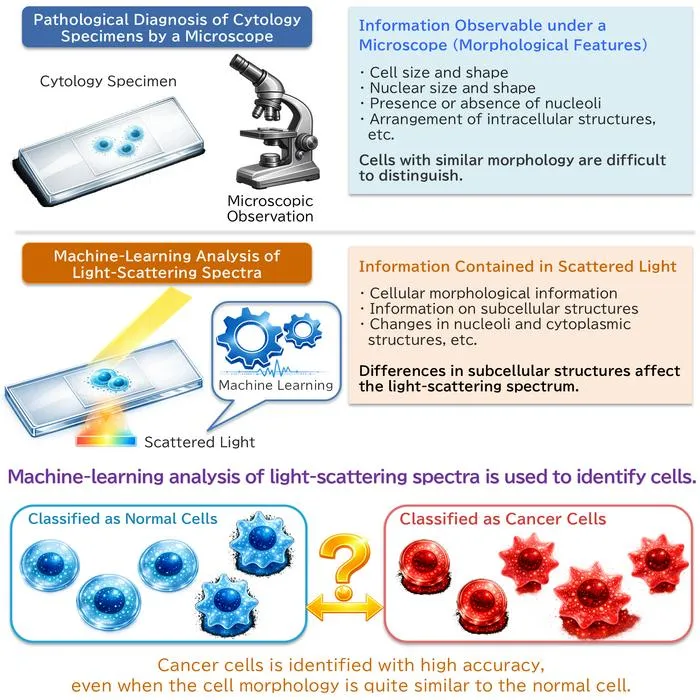
AI System Enhances Cancer Cell Detection via Light Scattering Spectra
Japanese researchers developed an AI system using light scattering spectra to improve cancer cell identification in cytology.

•EurekAlert
AI’s Potential to Expand, Not Shrink, the Clinical Workforce
AI advancements may lead to more, not fewer, healthcare jobs, challenging common fears about workforce reductions in specialties like radiology.
•EurekAlert
Rice University Aims to Revolutionize Imaging with Generative AI Cameras
Rice University receives NSF grant to develop AI-driven cameras that reconstruct images from minimal sensor data, promising advancements in efficient, intelligent imaging systems.