
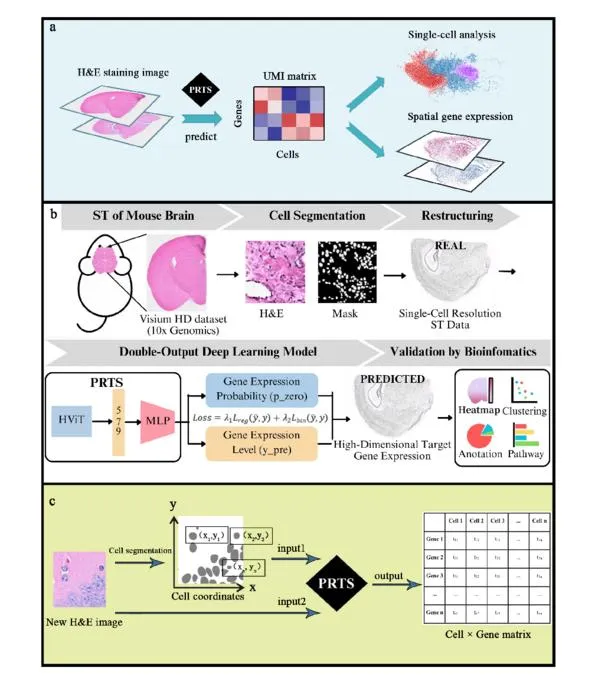
Researchers developed PRTS, a deep learning model that infers single-cell spatial transcriptomics from standard H&E-stained tissue images.
Key Details
- 1PRTS stands for Pathology-driven Reconstruction of Transcriptomic States.
- 2It predicts an expression matrix for 1,820 genes at single-cell resolution from H&E images.
- 3The method provides 27x higher resolution than traditional spatial transcriptomics spot technologies.
- 4Validated on mouse brain, human lung cancer, and breast cancer datasets.
- 5PRTS identified 21 cell subtypes and matched key gene expression patterns to ground truth.
- 6Potential applications include diagnostics, cancer subtyping, and drug discovery.
Why It Matters
PRTS could enable cost-effective, scalable spatial transcriptomics directly from routinely collected pathology slides, advancing both research and diagnostics where gene expression mapping was previously prohibitively expensive or impractical.

Source
EurekAlert
Related News
•EurekAlert
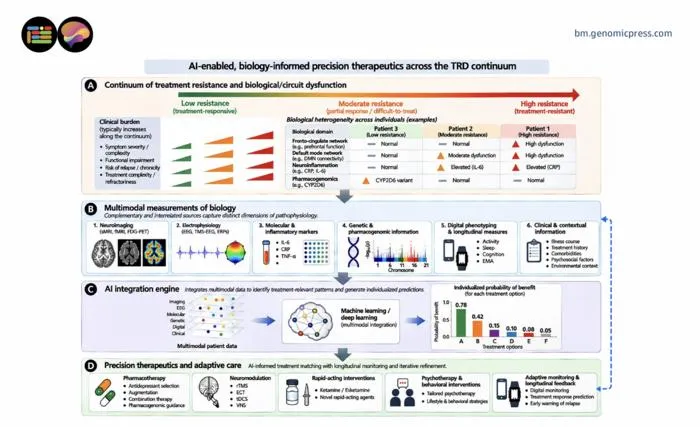
AI and Multimodal Imaging in Defining Treatment-Resistant Depression
A new review highlights AI's promise and current limitations in integrating neuroimaging, EEG, and biological data to improve clinical management of treatment-resistant depression.

•EurekAlert
UC Irvine Unveils AI-Physics Technique to Reconstruct Blood Flow from Imaging Data
UC Irvine researchers developed a physics-guided AI method to more accurately reconstruct cardiovascular fluid flow from imaging data that is sparse or noisy.
•EurekAlert
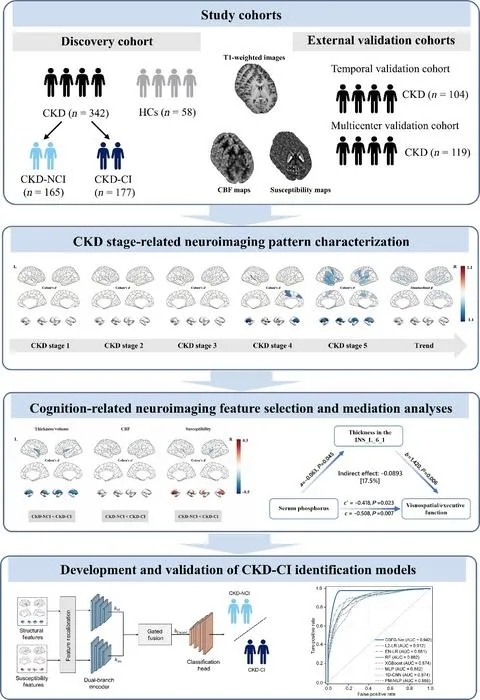
Deep Learning and MRI Identify Cognitive Impairment in CKD Patients
Researchers used multimodal MRI and a novel deep learning model to identify cognitive impairment in chronic kidney disease patients with strong validation.