
Back to all news
AI Model Predicts Colorectal Cancer Survival by Integrating Clinical and Molecular Data
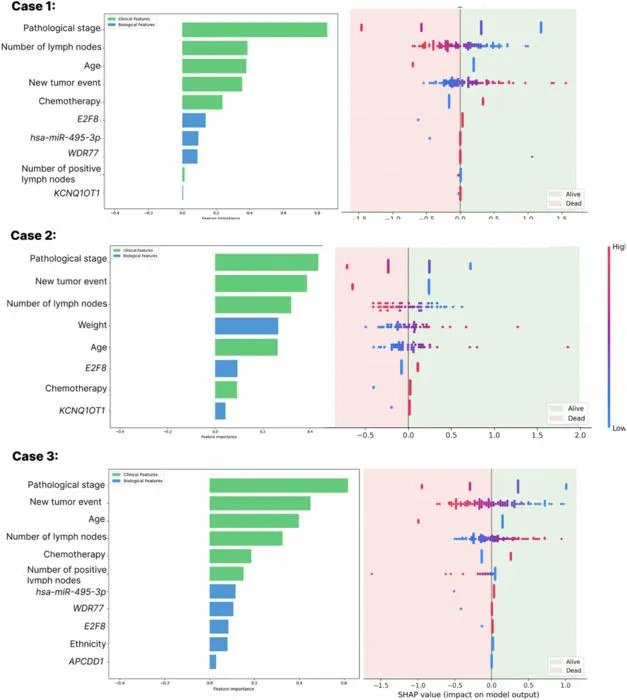
A research team developed a machine learning model that predicts colorectal cancer survival using combined clinical and molecular features, achieving high accuracy.
Key Details
- 1Study analyzed data from over 500 colorectal cancer patients using clinical (age, stage, chemotherapy) and molecular (gene/microRNA) features.
- 2Adaptive boosting ML model achieved 89.58% accuracy for survival prediction.
- 3Key predictive features included pathological stage, E2F8 gene expression, WDR77, and hsa-miR-495-3p microRNA.
- 4Combining clinical and biological data outperformed models using either data type alone.
- 5Study used publicly available data from the TCGA database; patient lifestyle factors were not included but seen as important for future work.
Why It Matters
The integration of clinical and molecular data using machine learning could enhance personalized risk stratification and treatment planning in colorectal cancer, an area of substantial clinical need. Such research advances the potential for AI-driven precision medicine in oncology and radiology.

Source
EurekAlert
Related News

•EurekAlert
AI Deep Learning Model Enhances Echocardiogram RV Assessment and Prognosis
Researchers developed DROID-RV, a deep learning tool that automates right ventricular assessment from echocardiograms, showing strong prognostic links with cardiovascular outcomes.

•EurekAlert
Duke Receives $25M to Lead National Trustworthy AI Hub for Dementia and Aging
Duke University has launched a $25 million national center to make AI for aging and dementia clinically robust and trustworthy.
•EurekAlert
Penn Medicine's Percival AI Detects Hidden Health Risks in CT Scans
Penn Medicine's Percival AI leverages CT scans to uncover unseen health risks and disease patterns, expanding the utility of radiological imaging.