
Penn Medicine's Percival AI leverages CT scans to uncover unseen health risks and disease patterns, expanding the utility of radiological imaging.
Key Details
- 1Percival is an AI model developed by Penn Medicine that analyzes CT scans for hidden patterns and potential future health risks.
- 2The model was trained on about 400,000 CT scans from 50,000 patients, using data from the Penn Medicine BioBank, which covers over 350,000 people.
- 3Percival can detect conditions such as atrial fibrillation, chronic kidney disease, pancreatic cancer, cirrhosis, and pneumonia more reliably than comparable models.
- 4The system is designed for opportunistic screening beyond the original scan purpose, aiming for earlier disease identification and intervention.
- 5Percival's code and training model specifications are open source, supporting broad collaboration and further enhancement.
- 6Clinical testing is planned for early next year, with the aim to bring Percival to routine clinical use.
Why It Matters
The ability of Percival to extract comprehensive health insights from routine CT scans could transform radiological practice, enabling earlier detection and management of chronic and critical diseases. Efficient opportunistic screening with open-source AI models could improve patient outcomes and democratize advances across health systems.

Source
EurekAlert
Related News
•EurekAlert
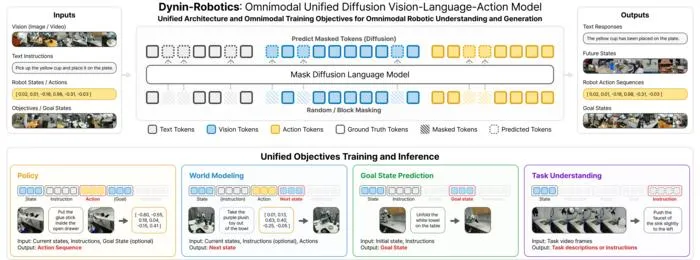
SNU Team Develops Omnimodal AI Model for Robotic Task Control, Eyes Medical Use
SNU engineers unveiled a unified AI model, Dynin-Robotics, that interprets language, predicts outcomes, and executes real-world robotic tasks with potential for medical applications.
•EurekAlert
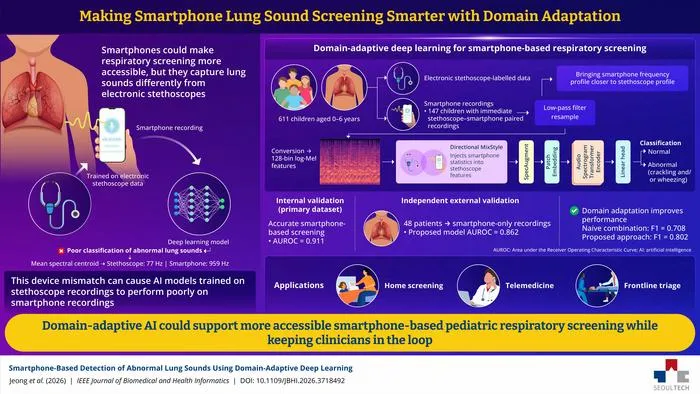
AI Framework Adapts Smartphone Audio for Pediatric Lung Sound Screening
Researchers developed a domain-adaptive deep learning model enabling smartphones to detect abnormal lung sounds in children for remote screening.

•EurekAlert
AI Tool Predicts Stroke Risk by Analyzing Genomic Data, Eyes Imaging Next
Researchers developed a transformer-based AI model to predict ischaemic stroke risk using genetic data, with plans to integrate imaging.