
Researchers developed DROID-RV, a deep learning tool that automates right ventricular assessment from echocardiograms, showing strong prognostic links with cardiovascular outcomes.
Key Details
- 1DROID-RV was trained on over 380,000 echocardiogram videos from 17,000+ patients.
- 2Model performance was validated in ~9,100 primary care and 831 external patients.
- 3Predicted RV size/function from DROID-RV was associated with heart failure, atrial fibrillation, and mortality, even beyond traditional assessments.
- 4Patients with predicted RV dilation were twice as likely to die within five years compared to those with normal RV size.
- 5The model estimates RV diameter within ~3 mm and flags reduced RV function with high accuracy.
Why It Matters
Automated AI tools like DROID-RV can improve efficiency, consistency, and prognostic value in echocardiographic interpretation, particularly where expert readers or advanced imaging resources are scarce. The findings suggest that AI-based assessments may uncover prognostic information beyond standard clinical measurements, potentially enhancing cardiac risk stratification.

Source
EurekAlert
Related News

•EurekAlert
Penn Medicine's Percival AI Detects Hidden Health Risks in CT Scans
Penn Medicine's Percival AI leverages CT scans to uncover unseen health risks and disease patterns, expanding the utility of radiological imaging.
•EurekAlert
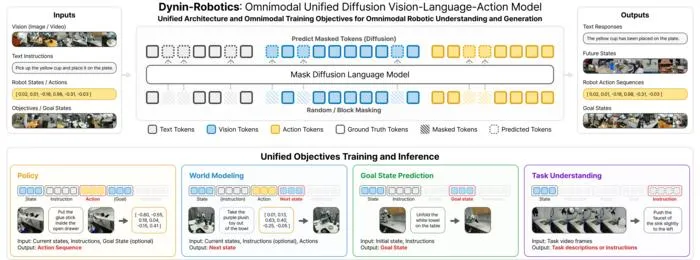
SNU Team Develops Omnimodal AI Model for Robotic Task Control, Eyes Medical Use
SNU engineers unveiled a unified AI model, Dynin-Robotics, that interprets language, predicts outcomes, and executes real-world robotic tasks with potential for medical applications.
•EurekAlert
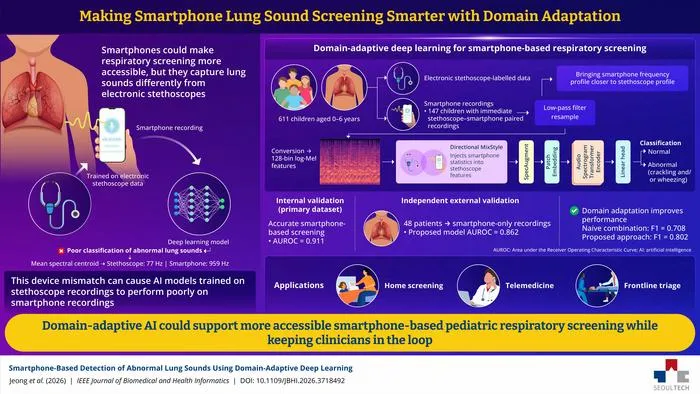
AI Framework Adapts Smartphone Audio for Pediatric Lung Sound Screening
Researchers developed a domain-adaptive deep learning model enabling smartphones to detect abnormal lung sounds in children for remote screening.