
Researchers found that AI-driven decision support improved correct decision rates among emergency care doctors, but physician acceptance of AI recommendations remains split.
Key Details
- 1Study tested AI-enabled decision-support display ('DecAide') during pediatric trauma simulations with 35 ER care providers from six health systems.
- 2In scenarios with both AI information synthesis and recommendations, correct decisions were made 64.4% of the time, versus 56.3% with synthesis only and 55.8% with no AI support.
- 3Some clinicians accepted AI recommendations only after making their own decisions, while others distrusted or ignored the AI's output.
- 4AI did not slow down decision making; time to decision remained consistent across scenarios.
- 5Concerns about AI recommendations related to physician autonomy, potential bias, and a lack of transparency regarding the AI's reasoning.
- 6Findings were presented at the ACM Conference on Computer-Supported Cooperative Work & Social Computing, suggesting more research and clarity in AI adoption for emergency care.
Why It Matters
Although AI support is making inroads in certain fields, its use in time-sensitive clinical workflows like emergency medicine brings distinct challenges. Understanding when, how, and whether clinicians trust and benefit from AI recommendations is crucial for safe and effective integration of such tools in acute care environments and serves as a parallel lesson for radiology-AI system adoption.

Source
EurekAlert
Related News
•EurekAlert
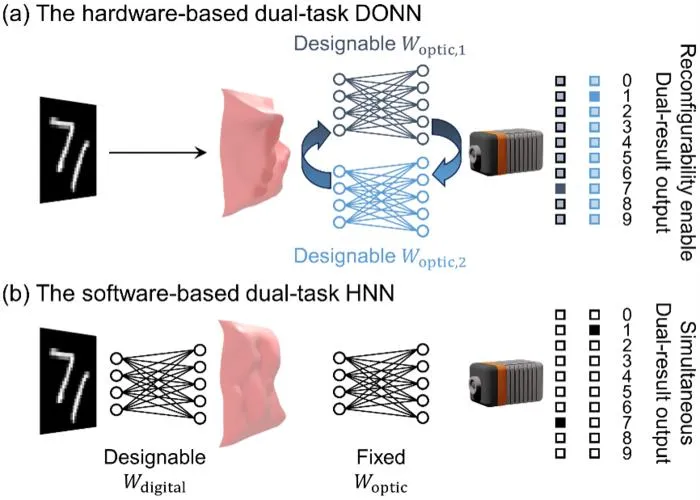
Holographic Neural Network Achieves Multi-Task AI via Light-Based Computing
Researchers have developed a holographic neural network using optics to perform multiple AI classification tasks simultaneously without hardware reconfiguration.
•EurekAlert
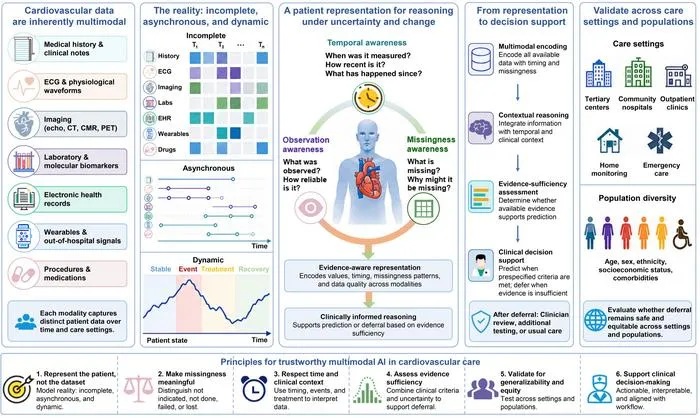
Rethinking Multimodal Cardiovascular AI: When Models Should Defer Predictions
A commentary in Medicine Discovery argues cardiovascular AI models must learn to defer predictions when key modalities are missing, as missingness and asynchrony are clinical realities.
•EurekAlert
MSKAI Unveils AI Tool for Embryo Cell Analysis and Imaging-Driven Cancer Insights
MSK researchers employ AI and advanced imaging to reveal cancer mechanisms and track embryonic development at the single-cell level.