
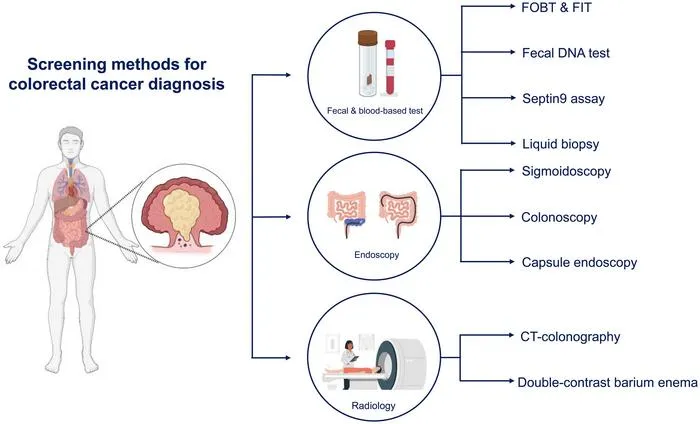
Recent innovations in colorectal cancer screening include advanced imaging, AI tools, and novel diagnostics to improve early detection and outcomes.
Key Details
- 1Colorectal cancer screening relies on fecal tests, endoscopy, and radiological methods such as CT colonography.
- 2CT colonography provides 3D images for non-invasive screening but has prep requirements and may miss small polyps.
- 3AI integration enhances polyp detection during colonoscopy and aids in automated histopathological and multi-omics analysis.
- 4Emerging technologies like single-cell sequencing and spatial transcriptomics contribute to better tumor characterization.
- 5Lifestyle changes and adherence to screening guidelines remain central to prevention and early detection.
- 6Future directions emphasize precision medicine and global standardization of CRC screening.
Why It Matters
Advances in radiological imaging and AI are enhancing the accuracy and accessibility of colorectal cancer screening, potentially leading to earlier diagnosis, better patient stratification, and personalized care. Emphasizing these tools can reduce CRC incidence and mortality by streamlining diagnostics and integrating new technologies into clinical workflows.

Source
EurekAlert
Related News

•EurekAlert
AI Deep Learning Model Enhances Echocardiogram RV Assessment and Prognosis
Researchers developed DROID-RV, a deep learning tool that automates right ventricular assessment from echocardiograms, showing strong prognostic links with cardiovascular outcomes.
•EurekAlert
Penn Medicine's Percival AI Detects Hidden Health Risks in CT Scans
Penn Medicine's Percival AI leverages CT scans to uncover unseen health risks and disease patterns, expanding the utility of radiological imaging.
•EurekAlert
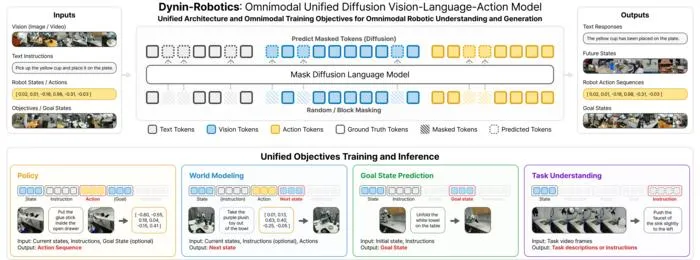
SNU Team Develops Omnimodal AI Model for Robotic Task Control, Eyes Medical Use
SNU engineers unveiled a unified AI model, Dynin-Robotics, that interprets language, predicts outcomes, and executes real-world robotic tasks with potential for medical applications.