
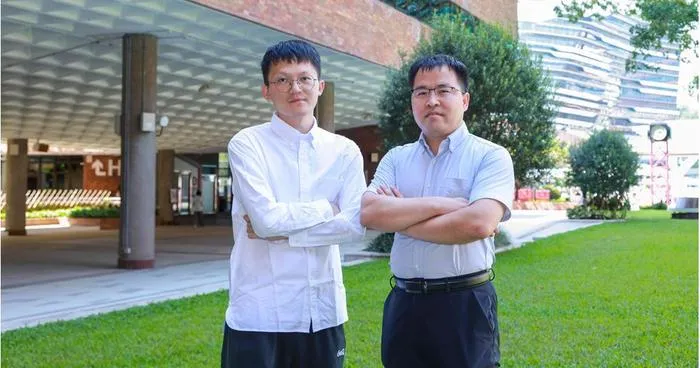
PolyU researchers introduce the TRUECAM AI framework to enhance the trustworthiness of pathology AI for cancer diagnosis.
Key Details
- 1TRUECAM is a model-agnostic AI framework focusing on trustworthy and uncertainty-aware pathology diagnoses.
- 2Initially applied to whole-slide image analysis for non-small cell lung cancer subtyping, but extensible to other cancers and pan-cancer tasks.
- 3Framework detects out-of-scope inputs, eliminates ambiguous regions, and uses conformal prediction to control error rates.
- 4Evaluation showed consistent improvements in accuracy, robustness, interpretability, data efficiency, and fairness over unwrapped models.
- 5TRUECAM flags uncertain cases for pathologist review to ensure clinical safety, aiming for responsible AI–pathologist collaboration.
- 6Published in Nature Biomedical Engineering with support from several major Chinese and Hong Kong funding bodies.
Why It Matters
Techniques that reliably quantify AI uncertainty are critical for clinical adoption in digital pathology, where diagnostic errors have significant consequences. Model-agnostic frameworks like TRUECAM could set new standards for trustworthy integration of AI in high-stakes diagnostic workflows.

Source
EurekAlert
Related News

•EurekAlert
AI Model Combines ECG and Blood Tests to Spot Heart Transplant Rejection
An AI model integrating ECG data and blood biomarkers predicts heart transplant rejection with high specificity, reducing the need for invasive biopsies.

•EurekAlert
NIH Grant Funds AI Tool for Lung Cancer Discovery at Weill Cornell
Dr. Olivier Elemento receives an NIH Pioneer Award to develop an AI-human hybrid platform for cancer research, initially focusing on lung cancer using imaging and tissue data.
•EurekAlert
Study Shows AI Vision Misses Human-Like Perceptual Illusions
A York University study finds that AI vision systems lack the human-like perceptual shifts seen in biological vision during visual illusions.