
Stanford researchers have developed SleepFM, an AI model that predicts over 100 diseases using one night of sleep study data.
Key Details
- 1SleepFM was trained on 585,000 hours of polysomnography data from 65,000 individuals.
- 2The AI model can predict 130 diseases from sleep data, including Parkinson's (C-index 0.89) and heart attack (C-index 0.81).
- 3Polysomnography collects brain, heart, respiratory, muscle, and eye movement data overnight.
- 4SleepFM outperformed standard models in classifying sleep stages and diagnosing sleep apnea.
- 5Stanford linked up to 25 years of health records to sleep data for longitudinal prediction studies.
- 6The research is published in Nature Medicine and received NIH and Chan-Zuckerberg Biohub funding.
Why It Matters
AI models like SleepFM show the underexploited potential of physiological imaging data for predicting diverse health outcomes. Their ability to integrate multimodal signals for disease risk stratification could reshape early detection in radiology, sleep medicine, and preventive healthcare.

Source
EurekAlert
Related News
•EurekAlert
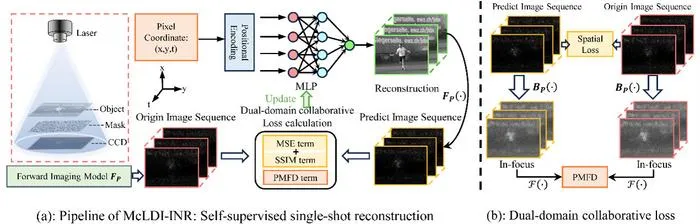
Deep Learning Enables Single-Shot High-Resolution Lensless Dynamic Imaging
Researchers from NJU and PKU have developed a lensless imaging method using deep learning that reconstructs high-fidelity dynamic images from single shots.

•EurekAlert
Weill Cornell Launches AI and Data Science Biomedicine Department Led by Dr. Dan Landau
Weill Cornell Medicine establishes a new Department of Systems and Computational Biomedicine, appointing Dr. Dan Landau as its first chair to drive AI-powered biomedical innovation.

•EurekAlert
TRUECAM AI Framework Boosts Reliability in Cancer Pathology Imaging
PolyU researchers introduce the TRUECAM AI framework to enhance the trustworthiness of pathology AI for cancer diagnosis.