
Back to all news
Scripps Researchers Develop AI Foundation Model for ECG-Based Heart Disease Prediction
A new AI foundation model, ECG-CLIP, improves detection and prediction of multiple heart diseases using large-scale ECG and clinician note data.
Key Details
- 1ECG-CLIP was trained on over 1.7 million ECGs from more than 540,000 people, paired with clinician notes.
- 2It outperformed other models in detecting acute myocardial infarction, cardiac amyloidosis, and hypertrophic cardiomyopathy, especially when labeled data was scarce.
- 3ECG-CLIP matched performance of models needing far more labeled examples, operating with about 91% less manually labeled data.
- 4The model excelled in single-lead ECG settings, increasing its usefulness in resource-limited environments.
- 5It also outperformed competitors in predicting atrial fibrillation and short- and long-term outcomes after emergency visits or surgery.
- 6Interpretability was enhanced with saliency maps, making the AI's decision process more transparent for clinicians.
Why It Matters
This work demonstrates how foundation AI models can enhance cardiovascular diagnostics, especially in settings where labeled data or multiple ECG leads are limited. Enhancing model interpretability and adaptability could accelerate clinical AI adoption and improve patient outcomes in cardiac care.

Source
EurekAlert
Related News
•EurekAlert
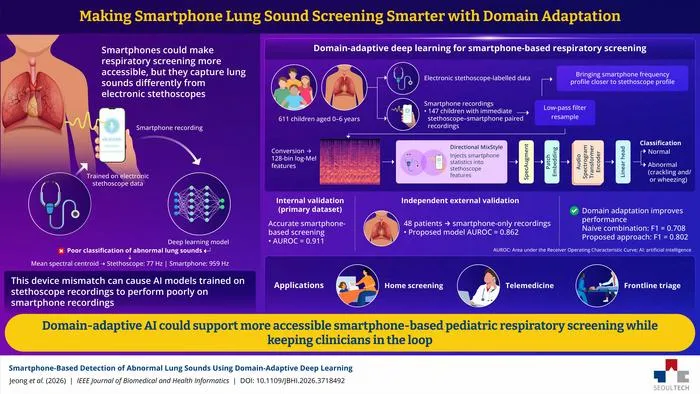
AI Framework Adapts Smartphone Audio for Pediatric Lung Sound Screening
Researchers developed a domain-adaptive deep learning model enabling smartphones to detect abnormal lung sounds in children for remote screening.

•EurekAlert
AI Tool Predicts Stroke Risk by Analyzing Genomic Data, Eyes Imaging Next
Researchers developed a transformer-based AI model to predict ischaemic stroke risk using genetic data, with plans to integrate imaging.
•EurekAlert
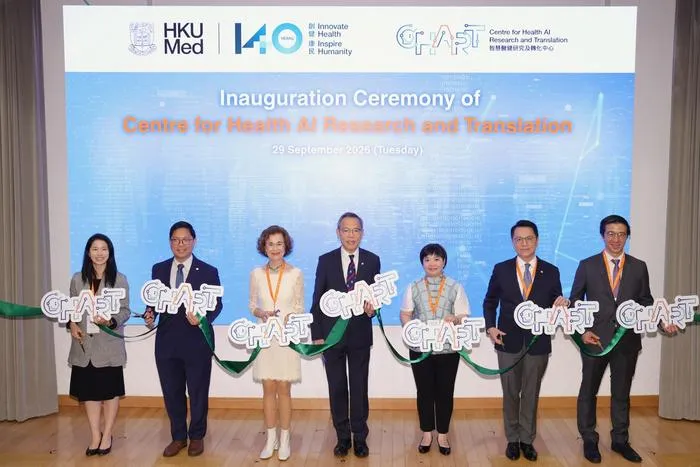
HKU Launches Centre for Health AI Research and Translation
The University of Hong Kong has established the Centre for Health AI Research and Translation (CHART) to drive trustworthy, patient-centered AI innovation in healthcare.