

Rice University receives NSF grant to develop AI-driven cameras that reconstruct images from minimal sensor data, promising advancements in efficient, intelligent imaging systems.
Key Details
- 1Rice University awarded a $900,000 three-year NSF grant for the project.
- 2The 'Generative Cameras' (GenCams) system uses generative AI to reconstruct images from sparse or selectively-sampled data.
- 3The cameras are designed to dramatically reduce data bandwidth, power, and cost for camera networks.
- 4Development phases include integration of RGB sensors, depth sensors, event-based sensors, and multimodal AI (imaging, sound, and text).
- 5Prototypes will be built and tested in real-world environments beyond the lab.
Why It Matters
This research may greatly impact how imaging is conducted in resource-limited or distributed settings, with potential for application in radiology, remote monitoring, and AI-driven analytics. By shifting more intelligence into software and reducing physical hardware needs, these advances could enable more efficient and accessible imaging systems.

Source
EurekAlert
Related News
•EurekAlert
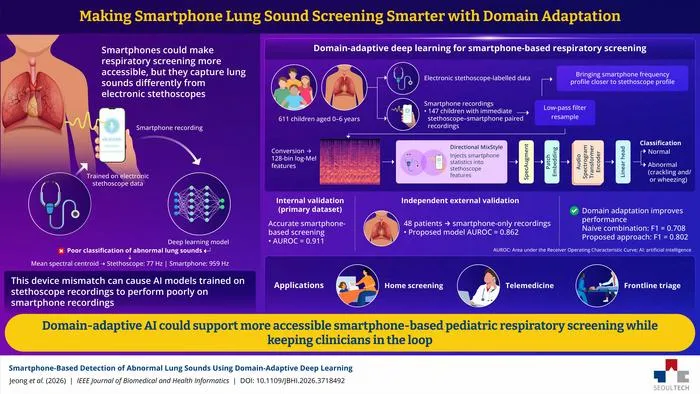
AI Framework Adapts Smartphone Audio for Pediatric Lung Sound Screening
Researchers developed a domain-adaptive deep learning model enabling smartphones to detect abnormal lung sounds in children for remote screening.

•EurekAlert
AI Tool Predicts Stroke Risk by Analyzing Genomic Data, Eyes Imaging Next
Researchers developed a transformer-based AI model to predict ischaemic stroke risk using genetic data, with plans to integrate imaging.
•EurekAlert
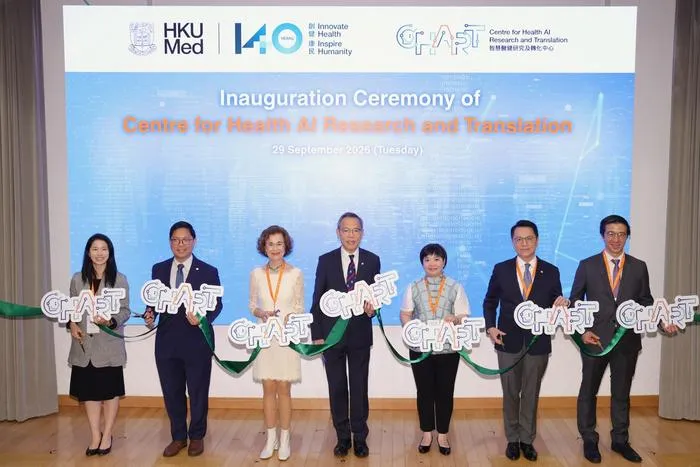
HKU Launches Centre for Health AI Research and Translation
The University of Hong Kong has established the Centre for Health AI Research and Translation (CHART) to drive trustworthy, patient-centered AI innovation in healthcare.