
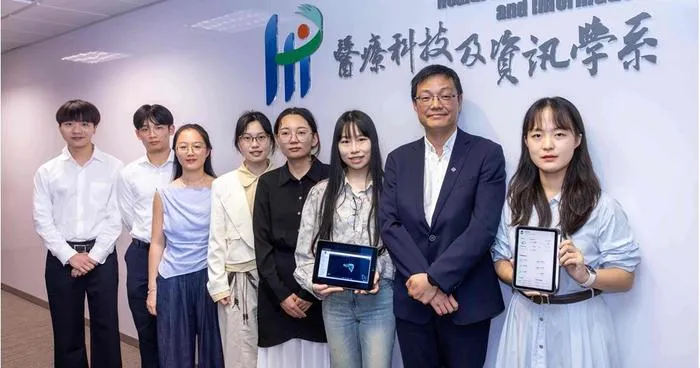
Hong Kong Polytechnic University develops an AI-powered digital twin system that integrates multimodal patient data, including medical imaging, for personalized cancer treatment planning.
Key Details
- 1PolyU's AI Virtual Patient Simulation System uses multimodal data—medical imaging, genomics, and clinical records—to create real-time digital twins of cancer patients.
- 2The system can predict effectiveness of different cancer treatment options, supporting more precise and personalized care.
- 3A novel framework (ViGNet) combining image and genomic data achieved 82.55% accuracy in predicting immunotherapy response for non-small cell lung cancer (NSCLC).
- 4Doctors and patients interact via dedicated platforms, enabling better monitoring and data sharing, including via an encrypted Deep Feature QR code.
- 5System showcased at Mobile World Congress 2026 and was a finalist for the Global Mobile Awards in the health innovation category.
- 6Project received funding from PolyU, GBA Innovation programs, and is advancing to commercialisation.
Why It Matters
This system demonstrates the potential for AI solutions that combine imaging and other data to improve personalization and efficacy in cancer care, enhancing precision medicine and workflow efficiency in clinical practice. Its strong performance and industry recognition signal rising adoption of intelligent, multimodal AI technologies in radiology and oncology.

Source
EurekAlert
Related News

•EurekAlert
AI Model Combines ECG and Blood Tests to Spot Heart Transplant Rejection
An AI model integrating ECG data and blood biomarkers predicts heart transplant rejection with high specificity, reducing the need for invasive biopsies.
•EurekAlert
EU Launches €20M CHAIN Project to Advance AI in Cardiovascular Care
The EU launches the CHAIN initiative to build a validated, federated AI ecosystem for cardiovascular health.

•EurekAlert
NIH Grant Funds AI Tool for Lung Cancer Discovery at Weill Cornell
Dr. Olivier Elemento receives an NIH Pioneer Award to develop an AI-human hybrid platform for cancer research, initially focusing on lung cancer using imaging and tissue data.