
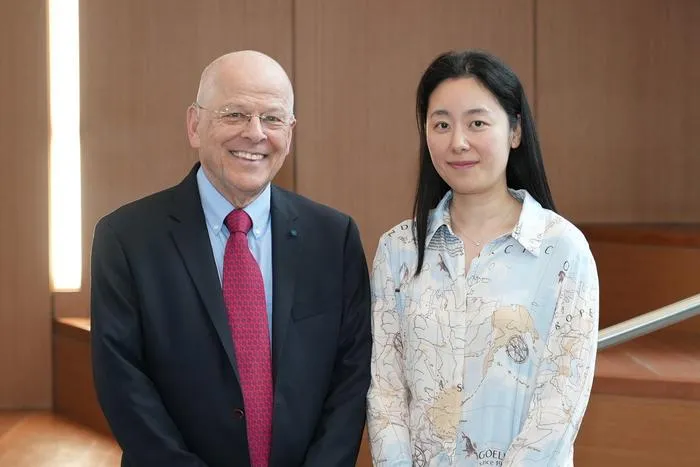
Lunit has acquired Prognosia, an AI-driven breast cancer risk prediction startup founded by WashU researchers, to accelerate clinical adoption of advanced mammography analytics.
Key Details
- 1Prognosia, co-founded by WashU Medicine researchers, uses AI-driven software to analyze mammograms for five-year breast cancer risk prediction.
- 2The software, Prognosia Breast, received FDA Breakthrough Device Designation in early 2024.
- 3Past research showed Prognosia's risk model is more than twice as accurate as standard questionnaire-based approaches.
- 4The technology performs well across diverse demographic groups and is compatible with both 2D mammography and 3D tomosynthesis imaging.
- 5Lunit aims to fast-track the technology’s journey to market by integrating it with existing clinical workflows.
- 6Founders will serve in advisory roles during FDA review and further development at Lunit.
Why It Matters
This acquisition could significantly advance the integration of AI-driven, highly accurate breast cancer risk prediction into routine clinical mammography, potentially improving early detection strategies and patient outcomes. The FDA Breakthrough Designation points to the technology's promise and urgency for health systems seeking better algorithmic tools in breast imaging.

Source
EurekAlert
Related News

•EurekAlert
NYU AI Model Improves 5-Year Breast Cancer Risk Prediction via 3D Mammograms
NYU researchers developed an AI model using longitudinal 3D mammograms that outperforms single-scan and 2D-based tools in predicting 5-year breast cancer risk.
•EurekAlert
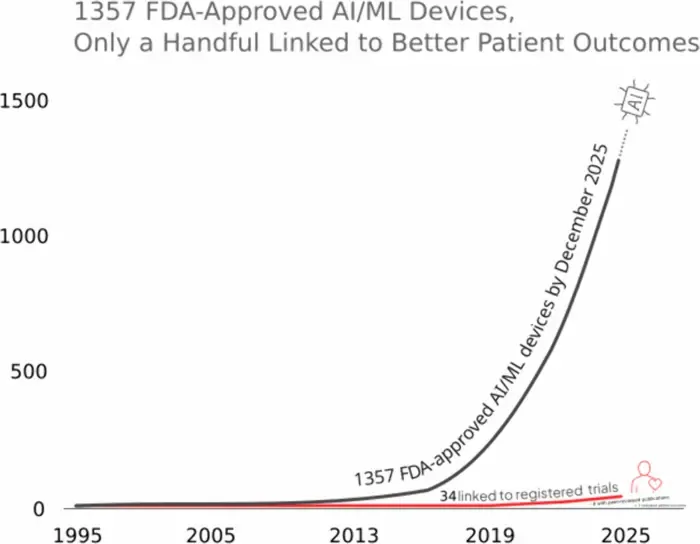
Study Reveals Only Three FDA-Cleared AI Devices Tested on Patient Outcomes
An analysis found that out of 1,357 AI-enabled medical devices cleared by the FDA, only three were actually tested for their effect on patient health outcomes.
•EurekAlert
AI-Driven Blood Test Shows Success in Early Liver Cancer Detection Across Populations
Researchers validate an AI-powered cfDNA blood test that detects liver cancer accurately across diverse populations, enhancing early detection efforts.