
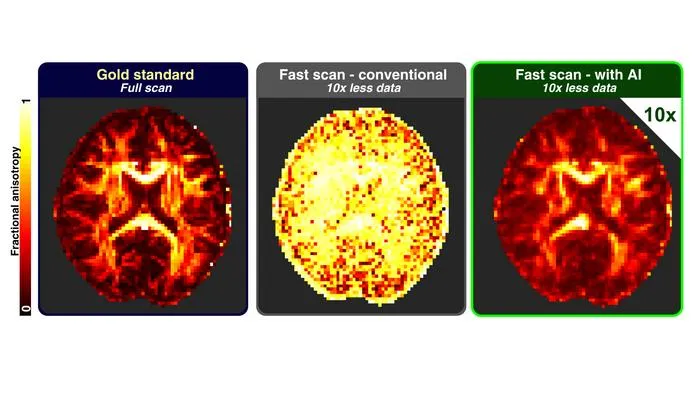
A simulation-based AI method can reconstruct brain MRI scans with only 10% of the usual data, greatly reducing scan times.
Key Details
- 1Researchers developed a method using AI and physics-based simulations to train models for brain MRI reconstruction.
- 2This approach eliminates the need for real patient data, reducing privacy issues and potential bias.
- 3The method achieves high accuracy using just 10% of the data normally required for diffusion-weighted MRI scans.
- 4Scan times could be reduced from about 40 minutes to roughly 8 minutes while maintaining clinical value.
- 5The solution allows retrospective analysis of old MRI data, enhancing research into neurodegenerative diseases like Alzheimer's.
- 6Findings are published in Communications Medicine (DOI: 10.1038/s43856-026-01614-6).
Why It Matters
Reducing MRI scan time and reliance on real data can improve access, reduce costs, and enable earlier, more robust diagnosis in clinical neuroimaging. AI-driven simulation also supports privacy and equity by overcoming traditional dataset limitations.

Source
EurekAlert
Related News

•EurekAlert
Machine Learning Models Predict Cancer Risk with Routine Health Data
Researchers developed machine learning models using routinely collected health data to predict individual risk for 20 common cancers, outperforming traditional methods for several cancer types.

•EurekAlert
Duke Receives $25M to Lead National Trustworthy AI Hub for Dementia and Aging
Duke University has launched a $25 million national center to make AI for aging and dementia clinically robust and trustworthy.
•EurekAlert
AI Deep Learning Model Enhances Echocardiogram RV Assessment and Prognosis
Researchers developed DROID-RV, a deep learning tool that automates right ventricular assessment from echocardiograms, showing strong prognostic links with cardiovascular outcomes.