
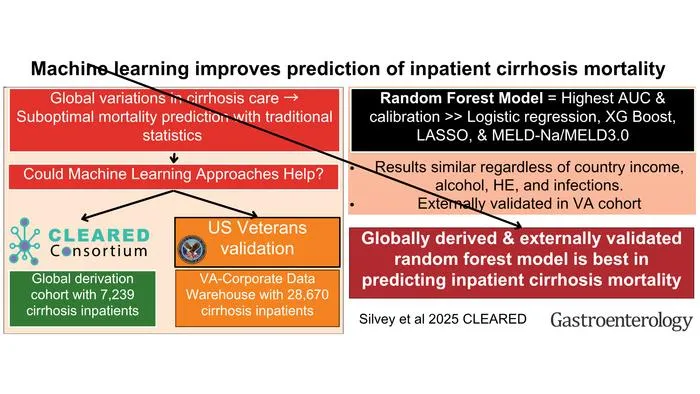
A machine learning model using random forest analysis improves the prediction of mortality risk in hospitalized patients with cirrhosis.
Key Details
- 1Study analyzed data from 121 hospitals worldwide participating in the CLEARED consortium.
- 2Random forest AI model outperformed traditional risk prediction methods for hospitalized cirrhosis patients.
- 3Model maintained accuracy across both high- and low-income countries.
- 4External validation was performed using National U.S. veterans’ data.
- 5Effective risk stratification was possible with just 15 variables.
- 6The tool grouped patients by mortality risk, supporting clinical decision-making.
Why It Matters
This study highlights the growing potential for AI to enhance clinical prognostication, supporting triage and care prioritization. AI models like this can be adapted to radiology and imaging datasets to similarly improve patient management and operational workflows.

Source
EurekAlert
Related News

•EurekAlert
Machine Learning Models Improve Mortality Prediction Post-Heart Attack
New machine-learning models outperform traditional risk scores for predicting mortality after a heart attack.
•EurekAlert
AI Heart Age Estimate from Ultrasound Predicts Long-Term Cardiovascular and Dementia Risk
AI-derived heart age from echocardiography images exceeds actual age: linked with higher cardiovascular and dementia mortality over 20 years.
•EurekAlert
MRI Study Reveals Disease Epicenters Driving Atrophy in Multiple Sclerosis
Large-scale MRI analysis identifies specific brain regions acting as epicenters of atrophy in multiple sclerosis patients.