
Stay Ahead of the Curve in Radiology AI.
RadAISlice is your weekly intelligence briefing on the most critical developments at the intersection of radiology and artificial intelligence. Stop searching. Start leading.Subscribe to join 11k+ radiology professionals tracking the future of imaging AI.
Featured In

Lastest Issues
The latest developments in Radiology & AI.
Reports & Market Maps
Explore our deeper briefings on radiology AI trends, market structure, and event-level intelligence.
SIIM 2026 AI Landscape
Analysis of SIIM 2026 sessions, themes, speaker mix, and abstract activity through the lens of imaging AI.
ECR 2026 AI Product Landscape
A launch-level view of ECR 2026 product announcements: AI share, product mix, and modality focus.
ECR 2026 AI Industry Landscape
A data-driven map of ECR 2026 exhibitors: AI share, vendor mix, and regional patterns.
Your Weekly Slice of Innovation
Each issue is precisely structured to give you exactly what you need. No fluff, just facts and forward-looking insights.
Recent Industry News
The Latest Research
FDA Approvals Database
Latest News & Trends
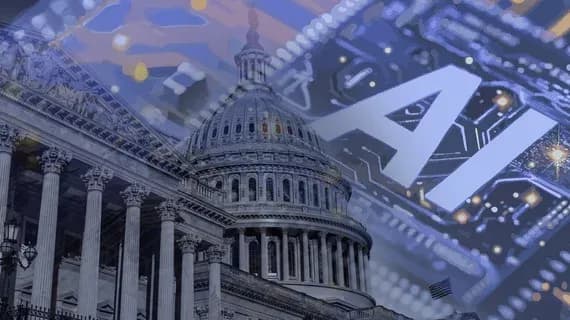
Radiology Societies Urge Patient Safety in FDA Generative AI Regulation
RSNA and ACR call for patient safety and ongoing monitoring as the FDA considers regulations for generative AI in radiology.
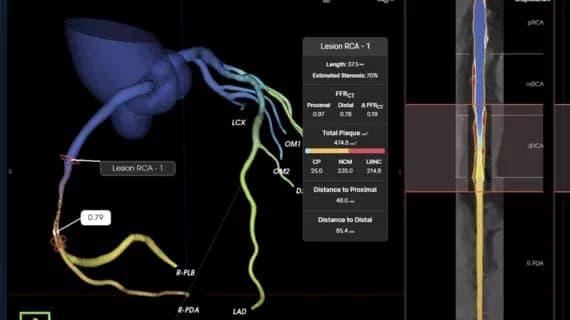
FDA Clears Elucid's AI-Driven FFR-CT Solution for Cardiac Imaging
Elucid's FFR-IQ, an AI-powered noninvasive FFR-CT tool, receives FDA clearance for clinical use.
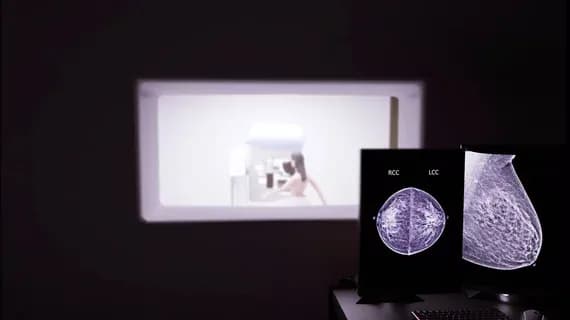
New AI Flags Uncertainty in Breast Cancer Imaging Predictions
University of Pittsburgh researchers developed an AI model that quantifies uncertainty in breast cancer diagnostic predictions to enhance trustworthiness.
From the Research Hub
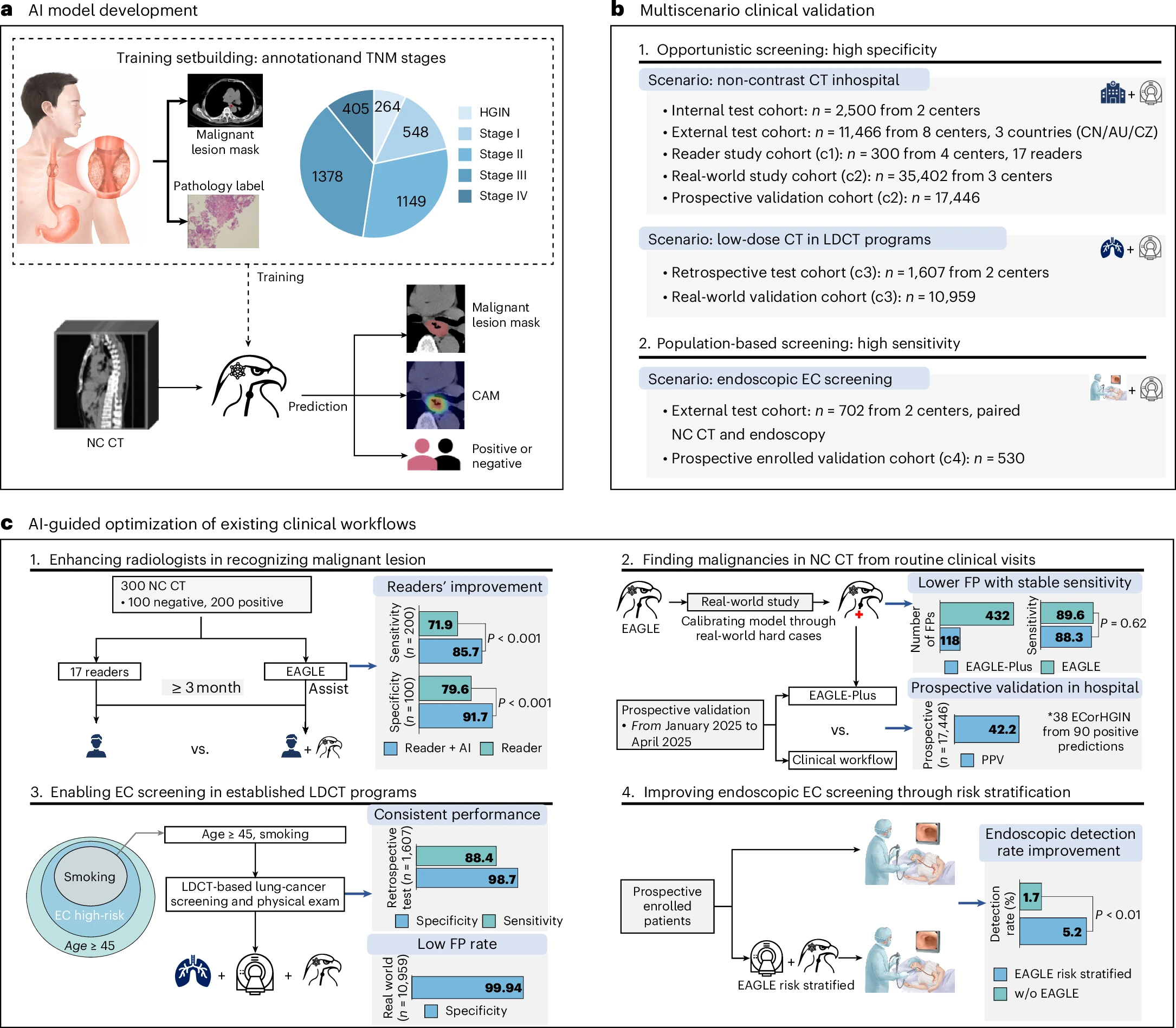
Habitat informed 3D deep learning predicts immunochemotherapy response in esophageal squamous cell carcinoma.
Immunochemotherapy (ICT) is a critical treatment for locally advanced esophageal squamous cell carcinoma (LA-ESCC), yet predicting individual response remains challenging. We developed a three-channel 3D deep learning framework integrating tumor habitat analysis for predicting ICT response. In this multicenter retrospective study of 277 patients, voxel-level clustering of pretreatment CT images segmented tumors into habitat subregions reflecting microenvironmental heterogeneity. A ResNet-50 model incorporating habitat maps, cropped tumor images, and ROI masks achieved an AUC of 0.927 (95% CI, 0.850-0.951) in the independent external test cohort, compared with 0.869 for habitat radiomics (DeLong <i>p</i> = 0.343). SHapley Additive exPlanations analysis identified texture features, particularly gray-level co-occurrence matrix correlation in habitat 3, as the primary contributors. This framework provides a noninvasive approach for predicting ICT response in LA-ESCC.
Assessment and implementation of AI-enabled digital health technologies in hospitals: a review and qualitative document analysis of HTA reports and guidance documents.
Artificial intelligence-enabled digital health technologies (AI-enabled DHTs), encompassing computing platforms, connectivity, software and sensors that incorporate AI or machine learning components for healthcare applications, are increasingly used in hospitals, yet practical methodological frameworks to guide investment decisions remain unclear. This publication, based on a comprehensive Health Technology Assessment (HTA) report, aims to provide hospital managers with structured approaches for assessing the added value of AI-enabled DHTs in clinical settings. We conducted a review with qualitative document analysis: (1) a focused hand search of 51 HTA agency websites through May 2024, supplemented by results from the ASSESS DHT project; (2) narrative comparison and thematic analysis of HTA methodology documents; (3) standardised extraction from HTA reports and (4) synthesis into practical recommendations to inform hospital procurement decisions. We identified five methods guidance documents and 30 HTA reports from 13 HTA agencies. The frameworks varied in scope, with most addressing DHTs and AI broadly, while some focused specifically on AI. Each framework highlighted AI-specific assessment domains beyond standard HTA criteria. The majority of HTA reports (27/30) focused on diagnostic and screening applications, particularly in radiology and internal medicine. In line with the study objective of providing structured guidance for hospital decision-makers, our synthesis shows that conventional HTA methods suffice for many domains, but AI-enabled DHTs require additional technical, ethical and organisational considerations. The European Network for HTA Core Model, supplemented with AI-specific guidance, provides a practical evaluation toolkit for hospitals.
The Value of System 1 Models in Medicine
Many clinical decisions are a choice among a few fixed options, taken quickly and in large numbers. Such decisions also need an uncertainty estimate to know when to defer to a clinician. Generative language models answer slowly in free text and state their confidence poorly. In contrast, System 1 models answer zero-shot with a probability for each answer. However, their performance across clinical tasks is unknown. Four System 1 models, two proprietary and two with open weights, were evaluated zero-shot on 86 public tasks from 14 clinical domains in 20 languages, spanning examination questions and medical imaging. Tasks were assigned to six capability tiers before analysis. The primary outcome was the area under the receiver-operating-characteristic curve (AUROC). Secondary outcomes included calibration, language effects and comparisons with published results and generative models. Across 179,111 cases, the mean AUROC of the best model per task was 0.94 for medical knowledge, 0.93 for text understanding, 0.83 for clinical judgement from text, 0.89 for image perception, 0.84 for 2D image findings and 0.69 for volumetric findings. Imaging tasks scored 0.09 (95% CI, 0.06 to 0.11) lower than text tasks (P < 0.001). The best model matched or exceeded the best published result on 13 of 26 text tasks and on 8 of 35 imaging tasks. Triage nurses outperformed the best model (accuracy, 0.85 vs. 0.56). One decision took 0.34 to 0.44 seconds and 24 to 81 joules on open-weight models run locally. Accuracy on identical questions fell by up to 39 percentage points from English to Yoruba. Generative models of the same family were 11 to 76 times slower, with 3 to 5 percentage points higher balanced accuracy. System 1 models decide quickly, cheaply and with usable confidence when the answer is stated in a text or recalled from medical knowledge, but not when it must be judged or read from an image.
From the RadAI FDA Approvals Database
Ischemaview, Inc.
Rapid ICH (v4.0)
Rapid ICH is an AI-powered software designed to help radiologists quickly identify and prioritize cases of intracranial hemorrhage on medical images, ensuring fast notification and potentially improving patient outcomes.
Deep Reasoning Ai, Inc.
NeuroDR
NeuroDR is an AI-powered software designed to assist radiologists in analyzing medical images. It aims to enhance the detection and review of radiological findings, supporting more accurate and timely diagnosis.
UAB Ligence
Ligence Heart
Ligence Heart is an AI-powered software designed to help clinicians analyze radiological heart images automatically, improving efficiency and potentially diagnostic accuracy in cardiac imaging.
The Sharpest Insights, Effortlessly
Save Time
We scour dozens of sources so you don't have to. Get all the essential information in a 5-minute read.
Stay Informed
Never miss a critical update. Understand the trends shaping the future of your practice and research.
Gain an Edge
Be the first to know about the tools and technologies that matter, from clinical practice to academic research.
Ready to Sharpen Your Edge?
Subscribe to join 11k+ peers who rely on RadAISlice. Get the essential weekly briefing that empowers you to navigate the future of radiology.
We respect your privacy. Unsubscribe at any time.