 | RadAISlice |
Weekly Updates in Radiology AI |
Good morning, there. A multicohort model used 11089 brain MRIs to detect tumor enhancement with 83.0 percent balanced accuracy. I see this as a practical gadolinium stewardship signal, not a replacement for contrast MRI. It could help radiology teams decide when a planned noncontrast exam needs contrast added. Pediatric performance still needs work. Could this change when you add gadolinium during brain tumor MRI?
Here's what you need to know about Radiology AI last week: Noncontrast brain MRI predicts enhancement Prostate MRI AI reduces biopsy burden Generative AI still trails radiologists RSNA releases aneurysm AI dataset Plus: 2 newly released datasets, 6 FDA approved devices & 4 new papers.
|
🧠 Noncontrast brain MRI predicts enhancement RadAISlice: I am watching this as a realistic triage use case for gadolinium sparing neuro oncology MRI. The details: 11,089 brain MRI studies came from 10 datasets in 4 countries nnU Net reached 83.0 percent balanced accuracy for enhancement detection Sensitivity was 91.5 percent and specificity was 74.4 percent Radiologist majority vote reached 71.7 percent balanced accuracy in 564 cases Only 45 percent of pediatric cases reached Dice of at least 0.3
Key takeaway: This could support contrast add on decisions for brain tumor MRI, but it should guide protocol triage rather than replace postcontrast imaging. |
🧬 Prostate MRI AI reduces biopsy burden 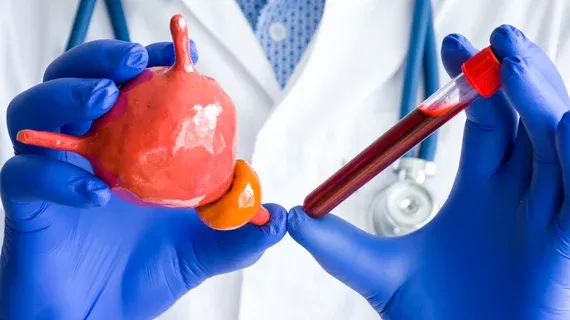 Image from: Radiology Business RadAISlice: This result feels clinically useful because it targets the gray zone around prostate MRI biopsy decisions. The details: AI was compared with radiologist assigned PI RADS on multiparametric MRI The approach avoided about 19 percent of prostate biopsies Sensitivity for clinically significant cancer remained 98.4 percent Findings were published in European Radiology Biopsy decisions still remain clinical and multidisciplinary
Key takeaway: A tool like this could reduce low value biopsies after prostate MRI while keeping radiologists central to risk communication. |
📊 Generative AI still trails radiologists RadAISlice: This meta analysis adds useful caution to current enthusiasm for image enabled generative AI. The details: 48 studies were included in the PRISMA DTA review Pooled accuracy was 42.9 percent for free text tasks Pooled accuracy was 58.1 percent for choice tasks Expert physicians were 13.0 percentage points more accurate overall Text only inputs outperformed image only inputs by 25.9 points
Key takeaway: For radiology, the near term role looks more like supervised text support than autonomous diagnostic image interpretation. |
🧠 RSNA releases aneurysm AI dataset RadAISlice: This dataset stands out because aneurysm AI needs diverse angiographic and routine neuroimaging examples. The details: 7,202 CTA, MRA, and MRI series came from 4,278 adult patients Data came from 21 institutions across 12 countries and 5 continents 5,041 series are publicly available for noncommercial research 178 series include 3D segmentations of vascular locations The dataset powered the 2025 RSNA aneurysm detection challenge
Key takeaway: Better public benchmarks should make aneurysm AI claims easier to compare across modalities, sites, and lesion types. |
DrugTargetWorld (Unspecified) Modality: MRI | Focus: Heart, cardiovascular disease | Task: Drug target discovery, causal inference Size: 20 synthetic worlds. Each has 54,000 participants and 10,800 cardiac MRI studies. Annotations: Hidden causal ground truth. Labels include driver proteins, bias decoys, intervention direction, and phenotype scoring targets. No released segmentations. Institutions: Stanford University, Brown University Availability: Highlight: Procedural synthetic biobank with concealed causal models for verifiable AI scientist benchmarking.
|
RSNA-ICA (2025 (exact date unspecified)) Modality: CTA, MRA, MRI | Focus: Brain, intracranial arteries | Task: Aneurysm detection, localization Size: 7,202 image series from 4,278 adults. Public MIRA release has 5,041 series. Annotations: Expert labels for aneurysm presence and 13 vascular locations. Point localizers; 3D vessel segmentations for 178 series. Institutions: RSNA, ASNR, et al. Availability: Public for noncommercial use: MIRA. Challenge data also on Kaggle.
Highlight: Largest public expert-annotated intracranial aneurysm dataset. Includes CTA, MRA, and routine MRI from 21 institutions.
|
🏛️ FDA Clearances K260055 - Siemens syngo.CT Brain Quantification segments CT hyperdensity and measures midline shift on noncontrast head CT. K260023 - SimBioSys TumorSight Risk estimates breast cancer recurrence risk using DCE MRI plus clinical pathology data. K262390 - BoneXpert estimates pediatric bone age from hand radiographs for patients ages 2 to 21 years. K261368 - Rapid Platform R6.7 supports automated CT, CTA, CTP, CBCT perfusion, and MRI analysis for acute stroke. K262548 - Philips EPIQ Inspira and Affiniti add AI assisted left atrial volume and strain quantification for echo. K261125 - Samsung NeuroLogica BodyTom 64 and OmniTom Elite add CT reconstruction software that reduces noise and artifacts. Explore last week's 12 radiology AI FDA approvals.
|
That's it for today! Before you go we’d love to know what you thought of today's newsletter to help us improve the RadAISlice experience for you. |
|
👋 Quick favor: drag this into your Primary tab so you don’t miss next week. Or just hit Reply with one thought. See you next week.
P.S. We keep building free tools to accelerate your radiology work. What's the most time-consuming pain point in your day that we should help speed up? Reply and share your take so we keep building around you. |
|
|
