
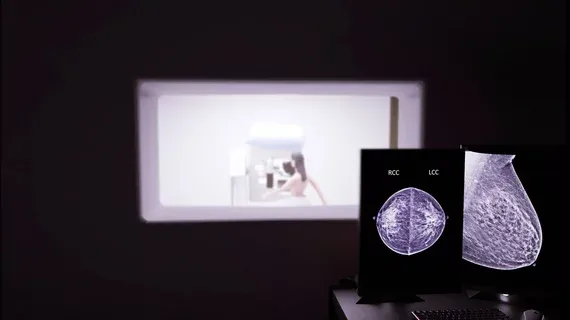
University of Pittsburgh researchers developed an AI model that quantifies uncertainty in breast cancer diagnostic predictions to enhance trustworthiness.
Key Details
- 1University of Pittsburgh team developed an 'uncertainty-weighted learning' model for breast cancer imaging AI.
- 2Model produces both diagnostic predictions and an associated uncertainty score for each case.
- 3Researchers believe the system can flag predictions that may need radiologist review, improving reliability.
- 4Method allows uncertainty to be integrated directly into model training.
- 5Model training used the Bridges-2 supercomputer at the Pittsburgh Supercomputing Center.
- 6Preliminary results indicate the method improves diagnostic confidence in AI outputs.
Why It Matters
Integrating uncertainty estimates directly into imaging AI can help radiologists identify which results require closer scrutiny, potentially reducing errors and increasing confidence in AI-assisted diagnosis. This approach addresses a key barrier to the adoption of AI in clinical radiology settings.

Source
Radiology Business
Related News

•AuntMinnie
LLMs Rarely Recommend Unnecessary Imaging, Except for Thyroid Ultrasound
Large language models seldom over-recommend imaging, but thyroid ultrasound guidance shows substantial discrepancies.

•Radiology Business
UC Irvine Implements AI to Find Lung Cancer Screening Candidates
UC Irvine's radiology department developed an NLP tool to identify patients eligible for lung cancer screening from EHR notes.

•Radiology Business
Webinar to Showcase Successful AI Automation in Radiology Workflows
A webinar will provide insights from imaging leaders on expanding and optimizing AI-driven automation in radiology clinical workflows.