
Researchers at the University of Sydney have developed an ultra-compact AI chip using light for rapid and energy-efficient image computation, successfully classifying medical images including MRI scans.
Key Details
- 1Nano photonic AI chip performs neural computations using light, not electricity.
- 2Prototype was validated by classifying over 10,000 biomedical images, including MRI scans of breast, chest, and abdomen.
- 3Achieved classification accuracy of approximately 90-99% in experiments and simulations.
- 4Chip performs calculations on a picosecond timescale (trillionths of a second).
- 5The technology aims to enable faster, more energy-efficient AI processing with a minimal energy footprint.
- 6A patent has been filed and further work is planned to scale the technology.
Why It Matters
This innovation in AI hardware could drastically reduce power consumption and increase the speed of medical imaging AI, offering a sustainable solution as computational demands grow in clinical radiology. It may enable real-time analysis and more scalable deployment of imaging AI systems.

Source
EurekAlert
Related News
•EurekAlert
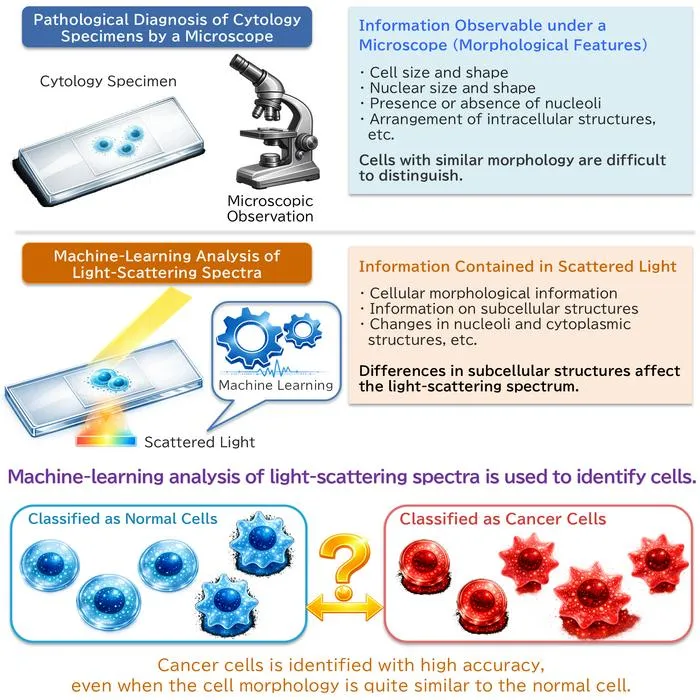
AI System Enhances Cancer Cell Detection via Light Scattering Spectra
Japanese researchers developed an AI system using light scattering spectra to improve cancer cell identification in cytology.
•EurekAlert
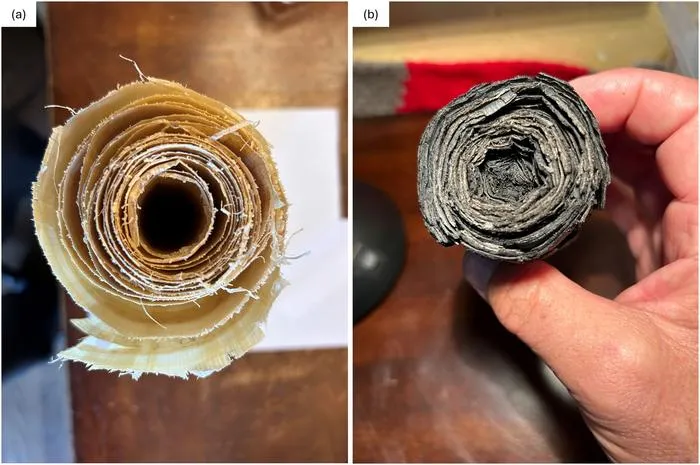
AI and X-ray Imaging Reveal Lost Texts in Ancient Roman Scrolls
AI and x-ray technology enable scientists to virtually read previously unreadable, carbonized Roman scrolls from Herculaneum.

•EurekAlert
AI’s Potential to Expand, Not Shrink, the Clinical Workforce
AI advancements may lead to more, not fewer, healthcare jobs, challenging common fears about workforce reductions in specialties like radiology.