
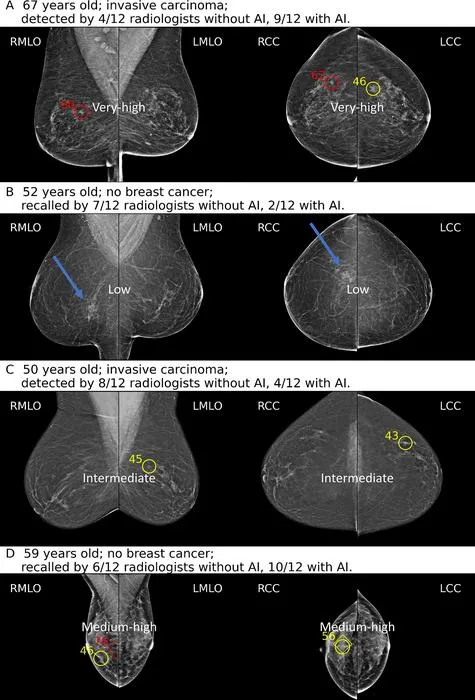
AI decision support improves radiologists' breast cancer detection accuracy when interpreting screening mammograms, mainly by enhancing focus on suspicious regions.
Key Details
- 1Peer-reviewed study published in Radiology journal (RSNA).
- 212 radiologists read 150 screening mammograms (75 with cancer, 75 without).
- 3AI support increased detection accuracy without affecting average reading time or sensitivity/specificity.
- 4Eye tracking showed radiologists spent more time on actual lesions when aided by AI.
- 5AI region scores influenced radiologist attention—higher scores led to more careful examination.
- 6Ongoing research is exploring the best timing and usage of AI decision support.
Why It Matters
The findings highlight AI's practical benefit in improving radiologists' performance during mammography screening, which can contribute to earlier breast cancer detection. Understanding how AI shapes radiologist workflow and perception is crucial for optimizing its integration into clinical practice.

Source
EurekAlert
Related News

•EurekAlert
UVA's $4M NIH Grant Backs AI to Optimize Cardiac MRI Therapies
UVA secures $4 million NIH funding to develop GenStrain, an AI model using MRI data to personalize cardiac pacing therapies.

•EurekAlert
Machine Learning Models Predict Cancer Risk with Routine Health Data
Researchers developed machine learning models using routinely collected health data to predict individual risk for 20 common cancers, outperforming traditional methods for several cancer types.

•EurekAlert
Duke Receives $25M to Lead National Trustworthy AI Hub for Dementia and Aging
Duke University has launched a $25 million national center to make AI for aging and dementia clinically robust and trustworthy.