
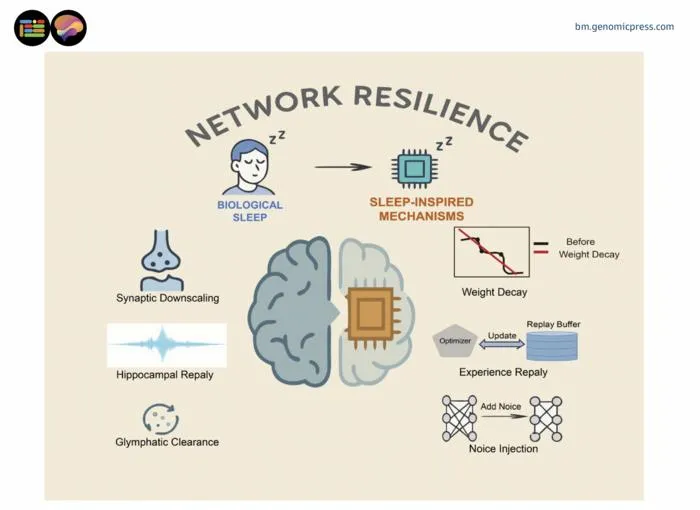
A new review proposes sleep as a critical resilience mechanism in biological brains and artificial neural networks, with implications for catastrophic forgetting in AI.
Key Details
- 1A Perspective in 'Brain Medicine' synthesizes data from neuroimaging, electrophysiology, and machine learning.
- 2Sleep is reframed as a system-level resilience function rather than just rest or housekeeping.
- 3Distinct NREM and REM phases correspond to network repair, renormalization, and reorganization.
- 4Analogous mechanisms in artificial neural networks, like replay and offline phases, are linked to preventing catastrophic forgetting and overfitting.
- 5Clinical correlations are drawn between disrupted sleep and network fragility (e.g., Alzheimer’s, epilepsy).
- 6The article is a synthesis rather than original experimental research; it highlights testable predictions.
Why It Matters
This synthesis bridges neuroscience and AI, highlighting the importance of structured offline phases for resilience in both biological and artificial learning systems. It offers conceptual backing for designing AI systems with sleep-inspired recovery mechanisms and suggests new directions for computational radiology research.

Source
EurekAlert
Related News

•EurekAlert
AI System Enhances Cancer Cell Detection via Light Scattering Spectra
Japanese researchers developed an AI system using light scattering spectra to improve cancer cell identification in cytology.
•EurekAlert
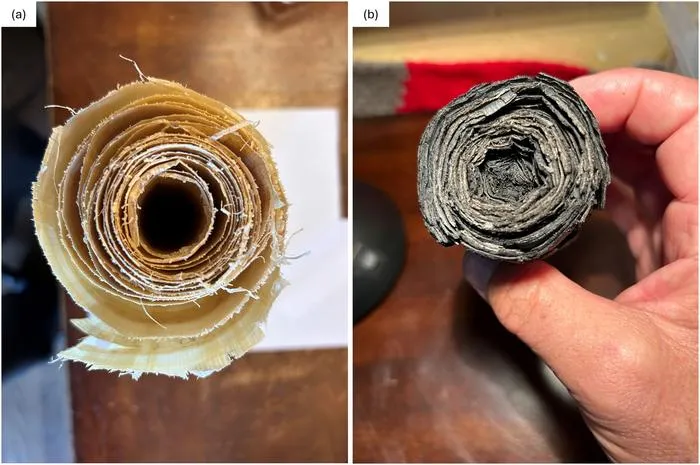
AI and X-ray Imaging Reveal Lost Texts in Ancient Roman Scrolls
AI and x-ray technology enable scientists to virtually read previously unreadable, carbonized Roman scrolls from Herculaneum.

•EurekAlert
AI’s Potential to Expand, Not Shrink, the Clinical Workforce
AI advancements may lead to more, not fewer, healthcare jobs, challenging common fears about workforce reductions in specialties like radiology.