
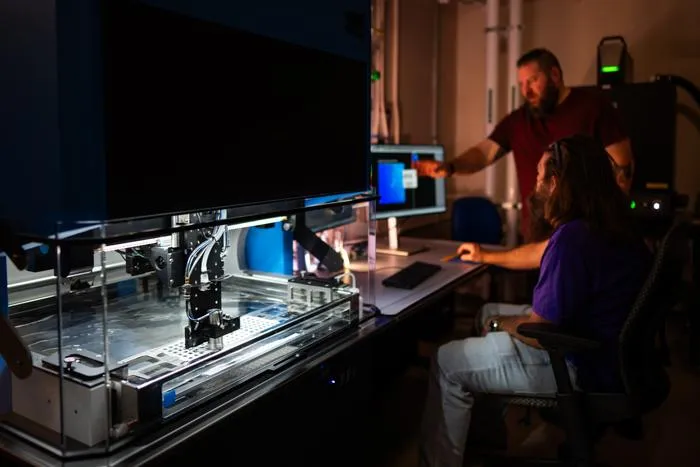
Sandia National Laboratories is introducing AI-assisted optical and acoustic imaging systems to streamline and improve ceramic component inspections for nuclear deterrence.
Key Details
- 1Sandia is implementing AI to aid inspections of ceramics using optical and acoustic imaging systems.
- 2The new workflow detects defects earlier in the manufacturing process, reducing costs and delays.
- 3Currently, manual inspection is slow and requires up to 2 years to fully train an operator.
- 4AI tools will highlight anomalies for human reviewers, but operators will remain essential in the loop.
- 5The imaging/AI system rollout is scheduled for early fall and is backed by the National Nuclear Security Administration's AI for Nuclear Security initiative.
- 6Plans include expansion of the workflow to other Sandia and nuclear security enterprise sites.
Why It Matters
This initiative exemplifies deployment of imaging AI in large-scale, non-medical industrial inspection, highlighting opportunities for AI-augmented visual review and cross-sector best practices. It underscores the adaptability and growing importance of imaging AI beyond healthcare, which is highly relevant for radiology professionals evaluating workflow integration and augmented inspection models.

Source
EurekAlert
Related News

•EurekAlert
UVA's $4M NIH Grant Backs AI to Optimize Cardiac MRI Therapies
UVA secures $4 million NIH funding to develop GenStrain, an AI model using MRI data to personalize cardiac pacing therapies.

•EurekAlert
Machine Learning Models Predict Cancer Risk with Routine Health Data
Researchers developed machine learning models using routinely collected health data to predict individual risk for 20 common cancers, outperforming traditional methods for several cancer types.

•EurekAlert
Duke Receives $25M to Lead National Trustworthy AI Hub for Dementia and Aging
Duke University has launched a $25 million national center to make AI for aging and dementia clinically robust and trustworthy.