
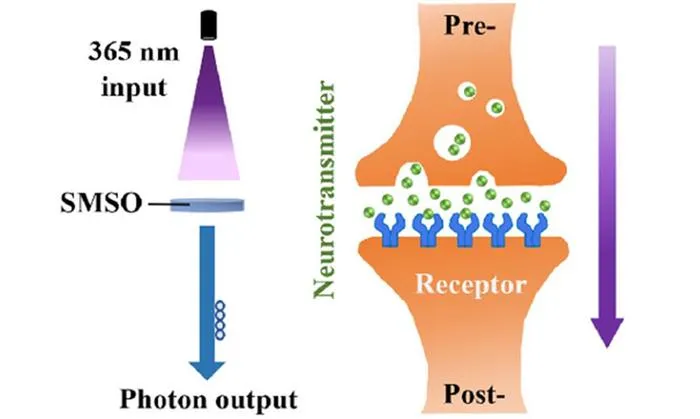
A new artificial synapse, controlled entirely by light, enables in-sensor neuromorphic processing for more efficient and noise-resistant imaging systems.
Key Details
- 1Researchers engineered a synaptic device using a rare-earth-doped crystal with persistent optical afterglow.
- 2The synapse uses light for both input and state update, avoiding electrical signals and reducing energy demands.
- 3It mimics neural plasticity, showing both signal enhancement (UV facilitates) and suppression (near-infrared depresses).
- 4Integration with a silicon imaging sensor led to a neuromorphic camera prototype capable of in-sensor contrast enhancement and denoising.
- 5Neural networks using this optical synapse achieved nearly 96% accuracy in digit recognition, vs. 78% without the technique.
Why It Matters
By combining sensing, memory, and processing using optical signals, this approach points towards future imaging systems—potentially relevant to clinical imaging and radiology AI—that are faster, more power-efficient, and intrinsically robust to noise.

Source
EurekAlert
Related News
•EurekAlert
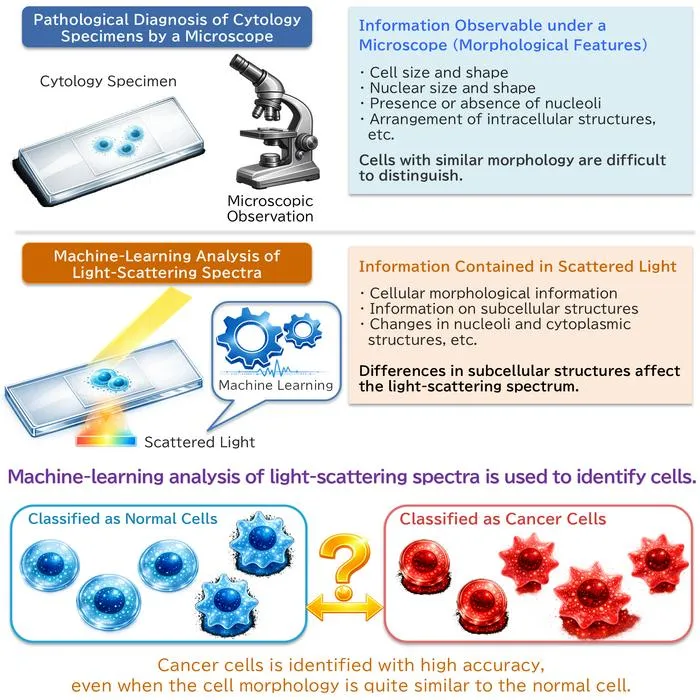
AI System Enhances Cancer Cell Detection via Light Scattering Spectra
Japanese researchers developed an AI system using light scattering spectra to improve cancer cell identification in cytology.
•EurekAlert
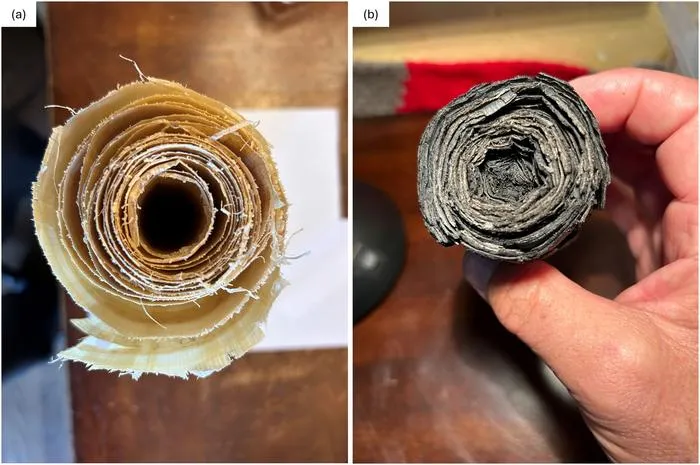
AI and X-ray Imaging Reveal Lost Texts in Ancient Roman Scrolls
AI and x-ray technology enable scientists to virtually read previously unreadable, carbonized Roman scrolls from Herculaneum.

•EurekAlert
AI’s Potential to Expand, Not Shrink, the Clinical Workforce
AI advancements may lead to more, not fewer, healthcare jobs, challenging common fears about workforce reductions in specialties like radiology.