
Back to all news
Recent AI Advances in Digital Breast Pathology: Models, Explainability, and Applications
AI is rapidly transforming breast pathology by improving diagnostic accuracy, workflow efficiency, and precision medicine through advances in deep learning and multimodal models.
Key Details
- 1The review summarizes foundational AI concepts such as neural networks, deep learning, and multimodal models in breast pathology.
- 2Current clinical applications include lymph node metastasis detection, Nottingham grading, biomarker quantification, and tumor classification.
- 3Explainable AI and model transparency are highlighted as critical for real-world clinical adoption.
- 4Recent developments include multimodal foundation models for comprehensive disease characterization and patient risk stratification.
- 5Major implementation challenges cover data quality, bias, regulatory requirements, cost, and workflow integration.
- 6AI integration is seen as augmenting, not replacing, pathologists to enhance diagnosis and patient care.
Why It Matters
Radiology and pathology share digital imaging workflows and AI-driven diagnostic advancements; innovations in breast pathology AI inform broader imaging AI adoption, supporting improved accuracy, reproducibility, and personalized treatment in cancer care.

Source
EurekAlert
Related News
•EurekAlert
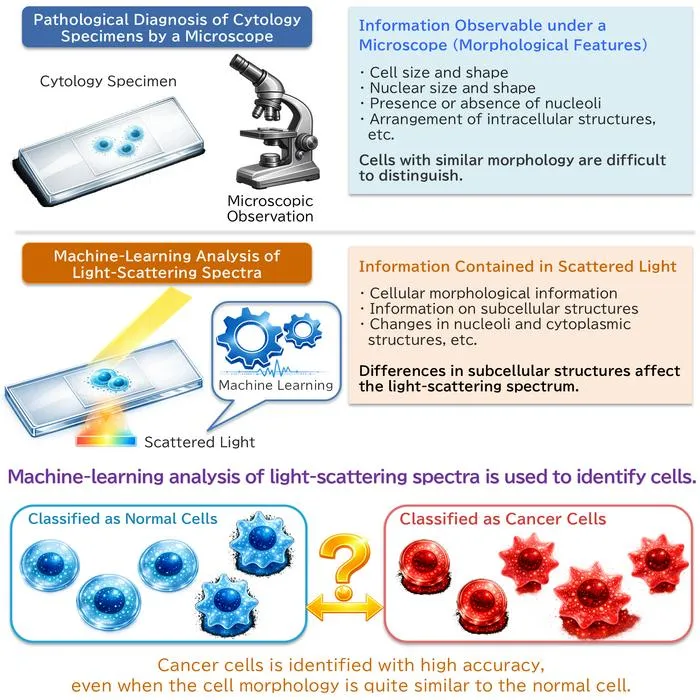
AI System Enhances Cancer Cell Detection via Light Scattering Spectra
Japanese researchers developed an AI system using light scattering spectra to improve cancer cell identification in cytology.
•EurekAlert
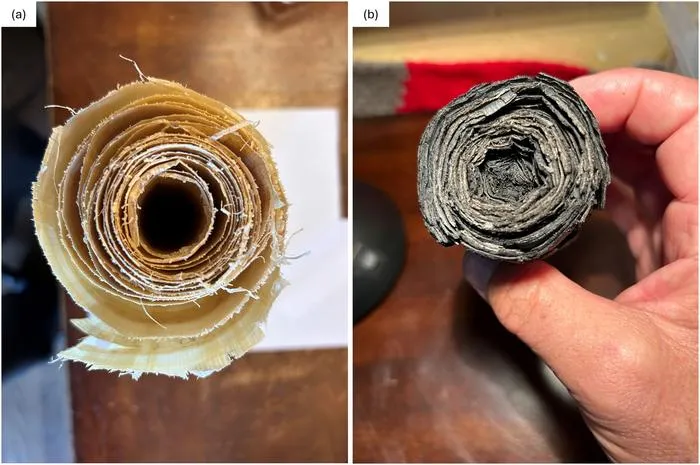
AI and X-ray Imaging Reveal Lost Texts in Ancient Roman Scrolls
AI and x-ray technology enable scientists to virtually read previously unreadable, carbonized Roman scrolls from Herculaneum.

•EurekAlert
AI’s Potential to Expand, Not Shrink, the Clinical Workforce
AI advancements may lead to more, not fewer, healthcare jobs, challenging common fears about workforce reductions in specialties like radiology.