
Radiologists’ perceived legal liability varies based on how AI is integrated into clinical workflows and how often scans are reviewed.
Key Details
- 1Study published in Nature Health on March 10, 2026, investigates malpractice perceptions with radiology-AI workflows.
- 2Researchers presented 282 mock jurors with scenarios involving CT scans where AI flagged a brain bleed that a radiologist missed.
- 3Nearly 75% of mock jurors felt a radiologist reviewing AI-flagged scans only once failed their duty of care, compared to 53% when reviewed twice.
- 4Mock jurors more often sided with plaintiffs if radiologists only reviewed AI-flagged results once.
- 5Workflow changes—such as double-reading scans with and without AI input—may reduce legal risks but could increase resource use.
Why It Matters
This research offers radiologists and administrators evidence-based insight into how clinical workflow decisions involving AI can impact perceived liability. Understanding these dynamics is crucial for designing safe, efficient, and defensible AI-assisted imaging practices.

Source
EurekAlert
Related News

•EurekAlert
AI System Enhances Cancer Cell Detection via Light Scattering Spectra
Japanese researchers developed an AI system using light scattering spectra to improve cancer cell identification in cytology.
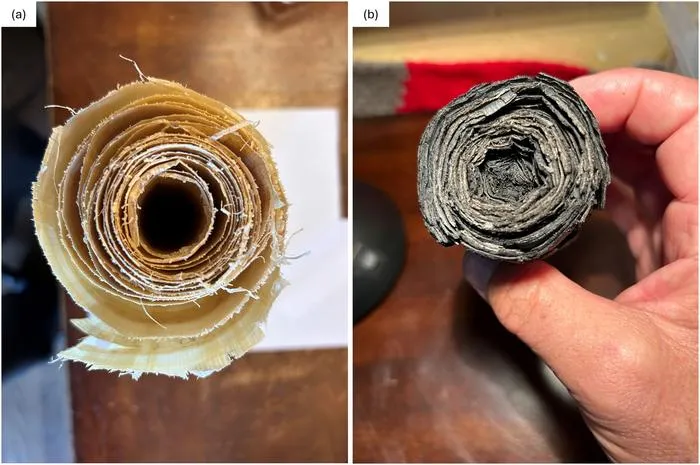
•EurekAlert
AI and X-ray Imaging Reveal Lost Texts in Ancient Roman Scrolls
AI and x-ray technology enable scientists to virtually read previously unreadable, carbonized Roman scrolls from Herculaneum.

•EurekAlert
AI’s Potential to Expand, Not Shrink, the Clinical Workforce
AI advancements may lead to more, not fewer, healthcare jobs, challenging common fears about workforce reductions in specialties like radiology.