
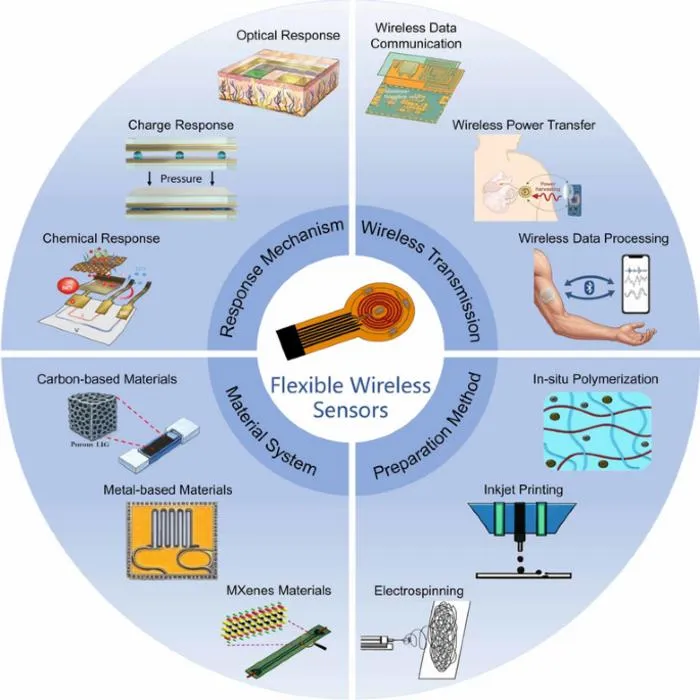
A major review highlights how advanced polymer-based flexible wireless sensors, enhanced by AI-driven data processing, can transform continuous physiological health monitoring.
Key Details
- 1The review presents an end-to-end framework linking material design, wireless transmission, and intelligent data processing for health sensors.
- 2Multiple sensor types (optical, electrical, chemical, magnetic, and multimodal) and wireless communication methods (NFC, BLE, Wi-Fi, ultrasonic) are analyzed for reliability and clinical applicability.
- 3Material systems evaluated include carbon nanostructures, metals (solid and liquid), functional polymers, hydrogels, and MXenes.
- 4Manufacturing techniques like 3D/4D printing, photolithography, screen/inkjet printing, and electrospinning are benchmarked for scalability and resolution.
- 5AI/edge computing models, such as lightweight neural networks, enable real-time analysis with >98% accuracy and <10 ms latency in prototypes.
- 6Challenges include energy harvesting, wireless link reliability, minimizing power, ensuring long-term wear, and regulatory/commercial translation.
Why It Matters
Continuous, wireless, skin-like health monitoring—augmented by AI processing at the edge—could enable new diagnostic and monitoring paradigms that bridge gaps left by traditional clinic-based, episodic imaging. These advances may substantially influence future cardiac, hemodynamic, and electrophysiological imaging, as well as open new frontiers for radiology’s role in digital medicine.

Source
EurekAlert
Related News
•EurekAlert
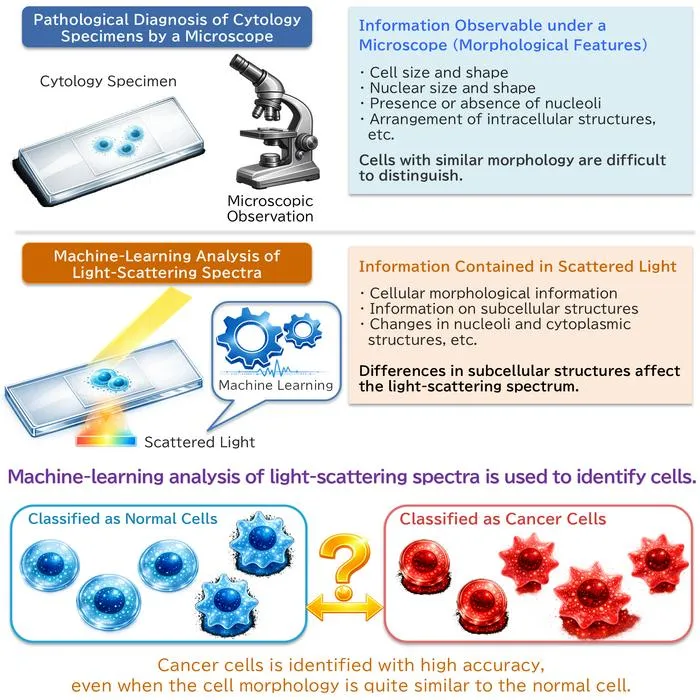
AI System Enhances Cancer Cell Detection via Light Scattering Spectra
Japanese researchers developed an AI system using light scattering spectra to improve cancer cell identification in cytology.

•EurekAlert
AI and X-ray Imaging Reveal Lost Texts in Ancient Roman Scrolls
AI and x-ray technology enable scientists to virtually read previously unreadable, carbonized Roman scrolls from Herculaneum.

•EurekAlert
AI’s Potential to Expand, Not Shrink, the Clinical Workforce
AI advancements may lead to more, not fewer, healthcare jobs, challenging common fears about workforce reductions in specialties like radiology.