
Advanced PET scans reveal that late-life depression and bipolar disorder may signal early neurodegenerative changes before dementia symptoms emerge.
Key Details
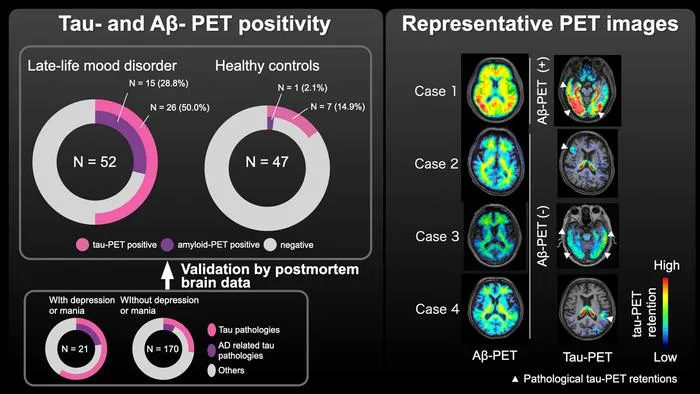
- 1Study involved 52 late-life mood disorder (LLMD) patients and 47 controls using PET imaging for tau and amyloid proteins.
- 2~50% of LLMD patients showed abnormal tau accumulation vs. 15% of controls; 29% had amyloid vs. 2% of controls.
- 3Autopsy of 208 brain cases confirmed higher tau-related pathologies in those with late-life mood symptoms.
- 4Pathological protein buildup detectable an average of 7.3 years before cognitive or motor symptoms.
- 5Study used two PET tracers to capture diverse tau and amyloid pathologies.
- 6Findings support tau-PET as a tool for early detection of neurodegenerative diseases in psychiatric populations.
Why It Matters
These findings advance the role of molecular PET imaging in diagnosing neurodegenerative diseases at the preclinical stage—especially in patients with mood disorders—enabling earlier interventions and reshaping the clinical approach to late-onset psychiatric presentations.

Source
EurekAlert
Related News

•EurekAlert
UVA's $4M NIH Grant Backs AI to Optimize Cardiac MRI Therapies
UVA secures $4 million NIH funding to develop GenStrain, an AI model using MRI data to personalize cardiac pacing therapies.

•EurekAlert
Machine Learning Models Predict Cancer Risk with Routine Health Data
Researchers developed machine learning models using routinely collected health data to predict individual risk for 20 common cancers, outperforming traditional methods for several cancer types.

•EurekAlert
Duke Receives $25M to Lead National Trustworthy AI Hub for Dementia and Aging
Duke University has launched a $25 million national center to make AI for aging and dementia clinically robust and trustworthy.