
Peking University's Xi Peng lab introduces LargePNet, a new AI for robust fluorescence image restoration, outperforming patch-based methods.
Key Details
- 1LargePNet is a new deep learning architecture for restoring fluorescence microscopy images using large-view structural correlations.
- 2It avoids conventional patch-based training, instead learning from images as large as 512×512 pixels to preserve global context.
- 3In benchmarks, LargePNet achieved 0.5–2 dB PSNR improvement over state-of-the-art methods and up to 20× faster inference than transformer models.
- 4Extensions of the model include generative tools (LargeP-GAN), video super-resolution (LargeP-TISR), and 3D/volumetric modules.
- 5Practical advances include 30-hour live-cell organelle imaging at 200 nm and three-color STED super-resolution imaging of cell structures.
- 6Source code, datasets, and pretrained models are made openly available by the team.
Why It Matters
This advance addresses key limitations in deep learning for microscopy, providing higher image fidelity and efficiency for long-term and super-resolution cell imaging, which are highly relevant for biomedical imaging, digital pathology, and possibly radiology workflows using similar restoration techniques.

Source
EurekAlert
Related News
•EurekAlert
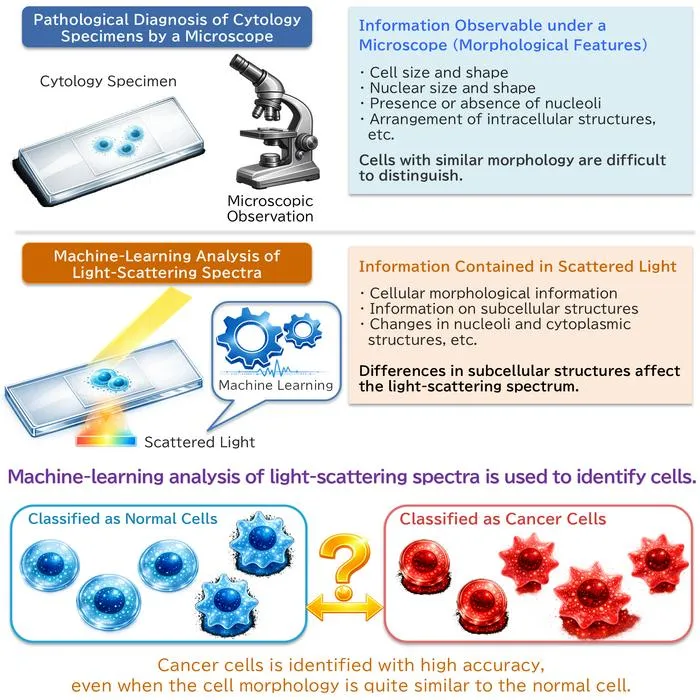
AI System Enhances Cancer Cell Detection via Light Scattering Spectra
Japanese researchers developed an AI system using light scattering spectra to improve cancer cell identification in cytology.
•EurekAlert
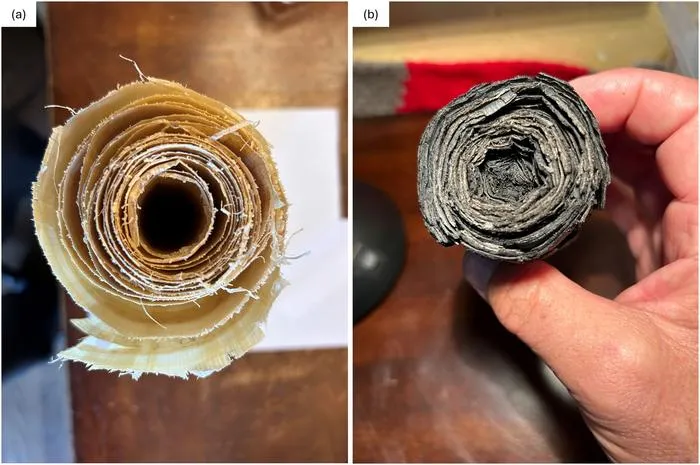
AI and X-ray Imaging Reveal Lost Texts in Ancient Roman Scrolls
AI and x-ray technology enable scientists to virtually read previously unreadable, carbonized Roman scrolls from Herculaneum.

•EurekAlert
AI’s Potential to Expand, Not Shrink, the Clinical Workforce
AI advancements may lead to more, not fewer, healthcare jobs, challenging common fears about workforce reductions in specialties like radiology.