
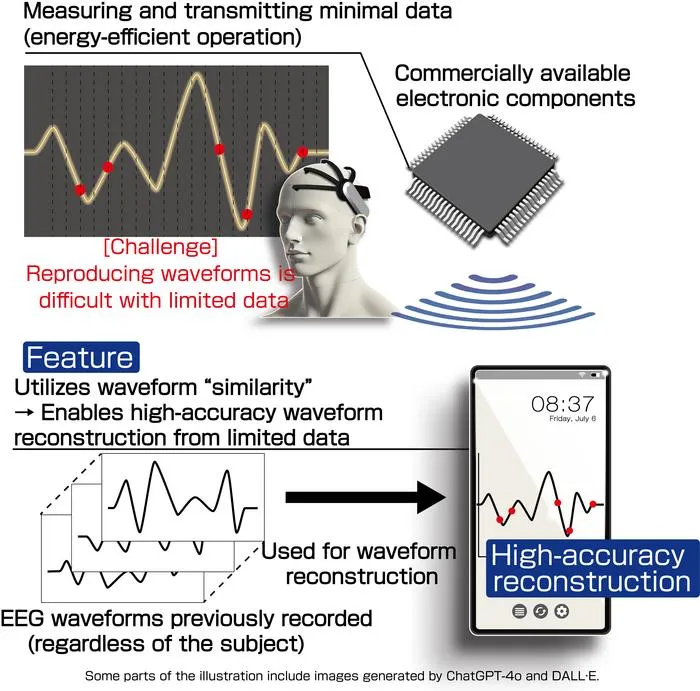
University of Osaka develops a high-precision, ultra-energy-efficient EEG system based on waveform similarity and compressed sensing.
Key Details
- 1New EEG measurement system achieves 72μW total power consumption.
- 2The approach leverages waveform similarity and compressed sensing instead of black-box generative AI.
- 3System built using commercially available microcontrollers (nRF52840).
- 4Demonstrated normalized mean squared error (NMSE) of 0.116 across 500 measurements.
- 5Targets wearable, long-term monitoring, and self-powered IoT healthcare devices.
Why It Matters
This breakthrough could enable long-duration, battery-efficient or even battery-free bio-signal monitoring in clinical and ambulatory settings. It directly addresses key limitations in wearable brain/computer interfaces, benefiting neuroimaging, patient monitoring, and AI diagnostic device development.

Source
EurekAlert
Related News
•EurekAlert
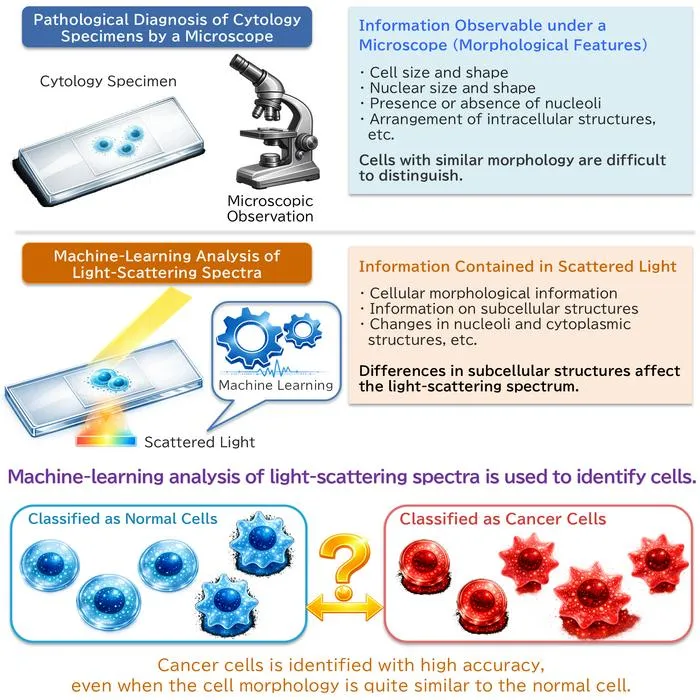
AI System Enhances Cancer Cell Detection via Light Scattering Spectra
Japanese researchers developed an AI system using light scattering spectra to improve cancer cell identification in cytology.
•EurekAlert
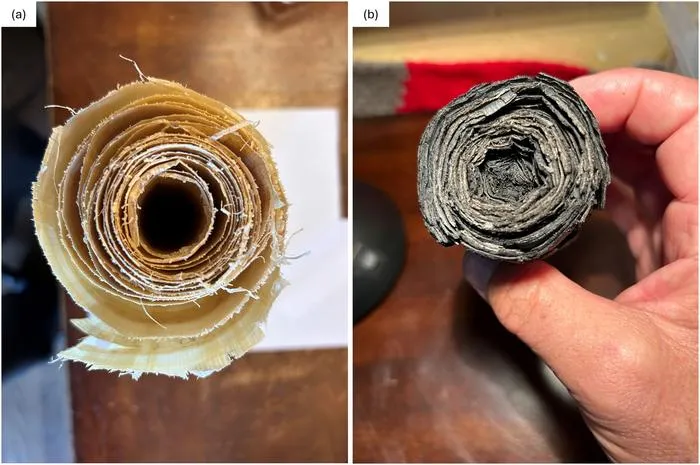
AI and X-ray Imaging Reveal Lost Texts in Ancient Roman Scrolls
AI and x-ray technology enable scientists to virtually read previously unreadable, carbonized Roman scrolls from Herculaneum.

•EurekAlert
AI’s Potential to Expand, Not Shrink, the Clinical Workforce
AI advancements may lead to more, not fewer, healthcare jobs, challenging common fears about workforce reductions in specialties like radiology.