
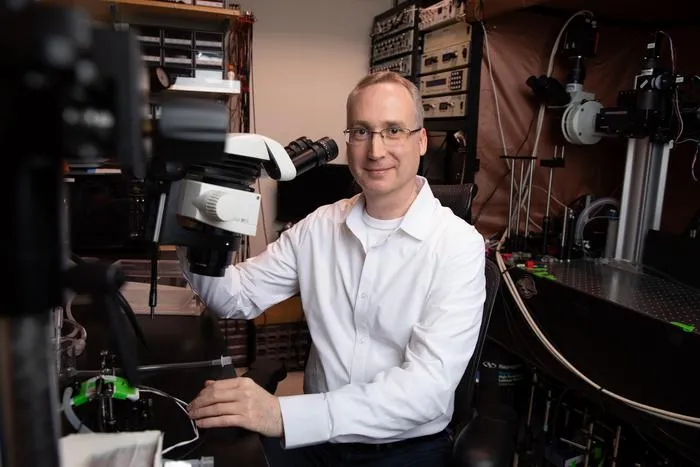
Salk and Einstein researchers have developed visible-spectrum antigen-stabilizable fluorescent nanobodies (VIS-Fbs) for sharper, multi-color live-cell imaging with minimal background noise.
Key Details
- 1VIS-Fbs only emit fluorescence when bound to their target, reducing background by up to 100-fold.
- 2The technology allows tracking of multiple cellular targets simultaneously across the visible spectrum.
- 3Validated in various mammalian cells, neurons, astrocytes in mice, and zebrafish models.
- 4Certain VIS-Fbs are photo-switchable, supporting high spatial and temporal imaging precision.
- 5Published in Nature Methods; supported by multiple major biomedical funding bodies.
Why It Matters
VIS-Fb probes offer a major advance for live-cell and tissue imaging accuracy, enabling real-time, high-contrast visualization of molecular processes in complex biological systems. This innovation could improve fundamental research and precision imaging applications, including those relevant to disease modeling and radiology AI integration.

Source
EurekAlert
Related News
•EurekAlert
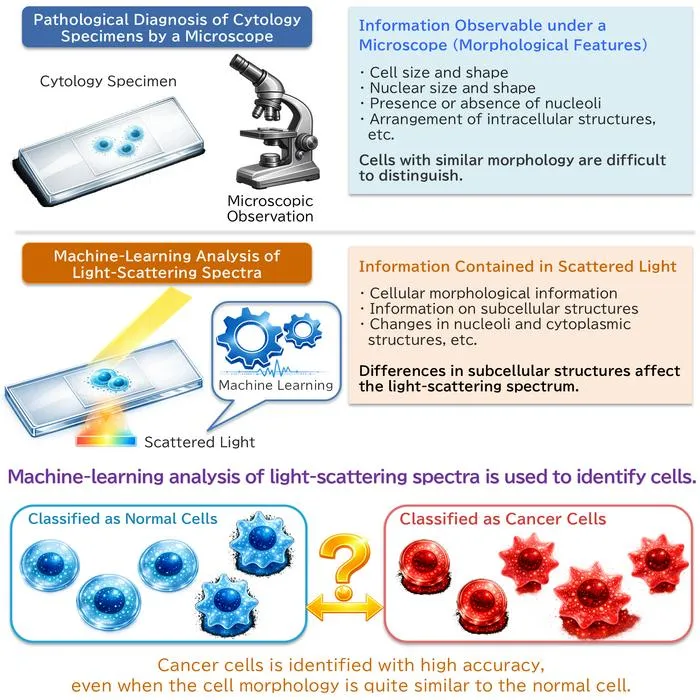
AI System Enhances Cancer Cell Detection via Light Scattering Spectra
Japanese researchers developed an AI system using light scattering spectra to improve cancer cell identification in cytology.
•EurekAlert
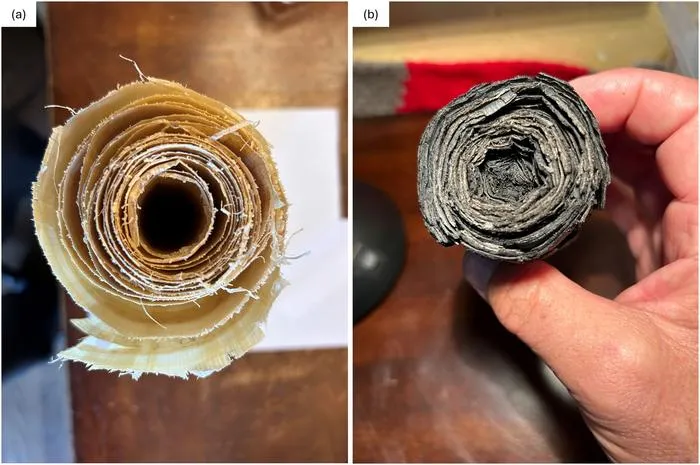
AI and X-ray Imaging Reveal Lost Texts in Ancient Roman Scrolls
AI and x-ray technology enable scientists to virtually read previously unreadable, carbonized Roman scrolls from Herculaneum.

•EurekAlert
AI’s Potential to Expand, Not Shrink, the Clinical Workforce
AI advancements may lead to more, not fewer, healthcare jobs, challenging common fears about workforce reductions in specialties like radiology.