
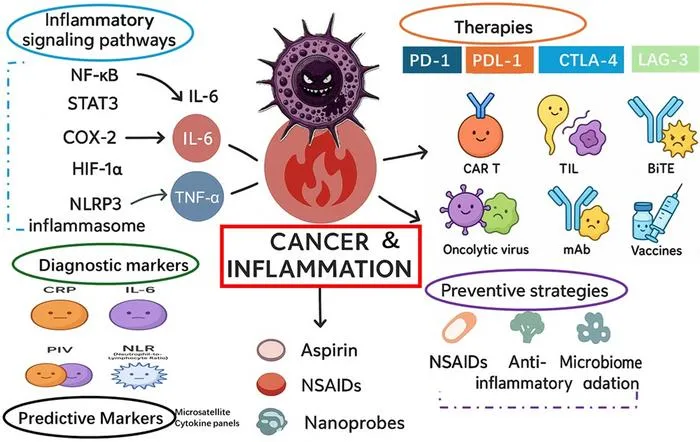
A recent review highlights inflammation’s dual role in cancer progression and how emerging tools like AI and imaging biomarkers are enhancing personalized immunotherapy.
Key Details
- 1Chronic inflammation promotes tumorigenesis, survival, and therapy resistance, but can also suppress cancer depending on context.
- 2Key pathways: NF-κB, STAT3, IL-6, COX-2, and specific immune cells modulate the tumor microenvironment.
- 3Immunotherapies show varying efficacy (20–40% response rates); biomarkers like CRP, IL-6, and imaging data are key for patient stratification.
- 4Combination strategies (immunotherapy plus anti-inflammatories or microbiome modulators) are under clinical investigation.
- 5AI models incorporating imaging and multi-omic data are enabling real-time treatment personalization; Stanford’s 2024 model integrates imaging/text.
- 6Emerging tools include liquid biopsies, single-cell omics, gene editing, and nanotechnology for more precise disease monitoring.
Why It Matters
Understanding how inflammation drives cancer and therapy resistance is crucial for radiology, especially as integration of imaging, AI, and novel biomarkers underpins the move toward precision oncology. These advances offer new avenues for diagnosis, patient stratification, and monitoring treatment response using imaging and AI-driven tools.

Source
EurekAlert
Related News
•EurekAlert
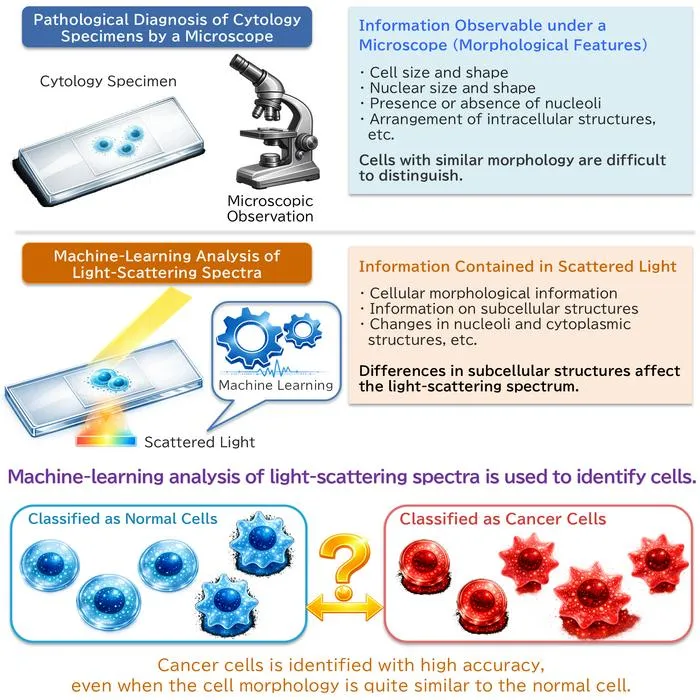
AI System Enhances Cancer Cell Detection via Light Scattering Spectra
Japanese researchers developed an AI system using light scattering spectra to improve cancer cell identification in cytology.
•EurekAlert
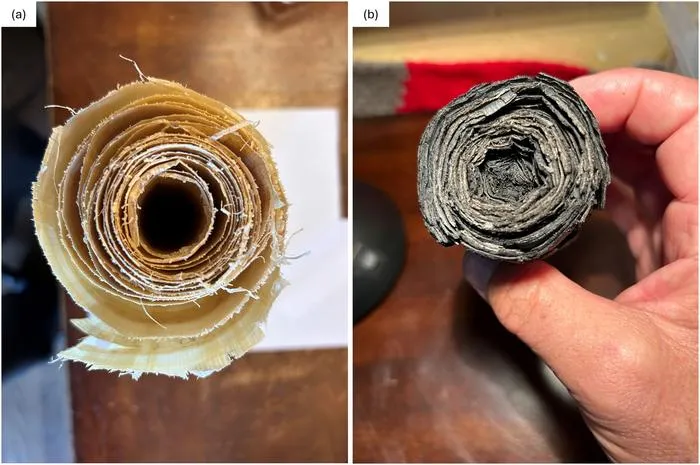
AI and X-ray Imaging Reveal Lost Texts in Ancient Roman Scrolls
AI and x-ray technology enable scientists to virtually read previously unreadable, carbonized Roman scrolls from Herculaneum.

•EurekAlert
AI’s Potential to Expand, Not Shrink, the Clinical Workforce
AI advancements may lead to more, not fewer, healthcare jobs, challenging common fears about workforce reductions in specialties like radiology.