
Stanford-led researchers unveil advanced optical imaging technology to visualize neuron-specific brain waves, revealing novel propagation patterns in mice.
Key Details
- 1Two ultra-sensitive optical instruments detect genetically engineered voltage indicators in mice brains.
- 2Technology enables real-time imaging of brain waves with neuron-type specificity and high spatial resolution (up to 8 mm-wide images).
- 3Researchers discovered three previously unknown brain wave types, including novel beta and theta wave directions.
- 4Findings offer insights into diseases like epilepsy, Alzheimer’s, and Parkinson’s, and potential inspiration for AI models.
- 5Study published in Cell (DOI: 10.1016/j.cell.2025.06.028), supported by NIH funding and Stanford/Allen Institute collaborations.
Why It Matters
This breakthrough in brain wave imaging technology provides new tools for disease research and advances our understanding of neural mechanisms, which could inform both clinical radiology and the development of next-generation, bio-inspired AI systems.

Source
EurekAlert
Related News
•EurekAlert
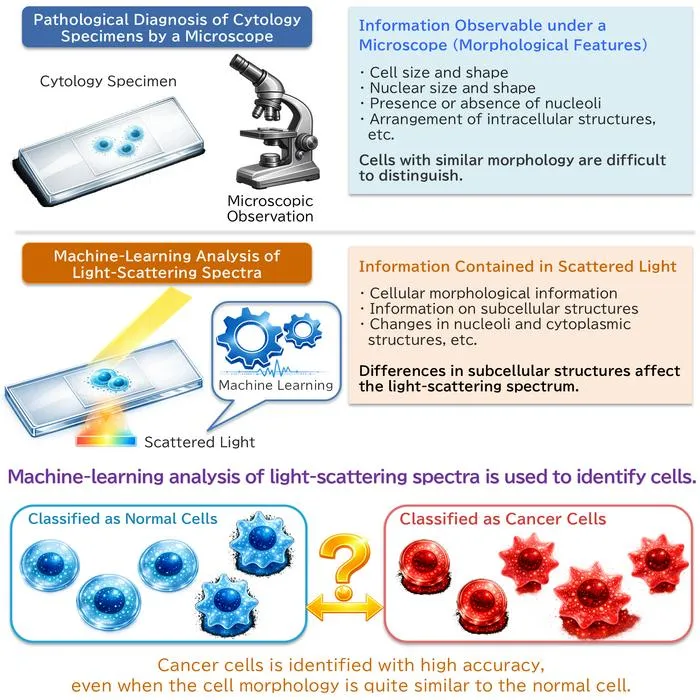
AI System Enhances Cancer Cell Detection via Light Scattering Spectra
Japanese researchers developed an AI system using light scattering spectra to improve cancer cell identification in cytology.

•EurekAlert
AI and X-ray Imaging Reveal Lost Texts in Ancient Roman Scrolls
AI and x-ray technology enable scientists to virtually read previously unreadable, carbonized Roman scrolls from Herculaneum.

•EurekAlert
AI’s Potential to Expand, Not Shrink, the Clinical Workforce
AI advancements may lead to more, not fewer, healthcare jobs, challenging common fears about workforce reductions in specialties like radiology.