
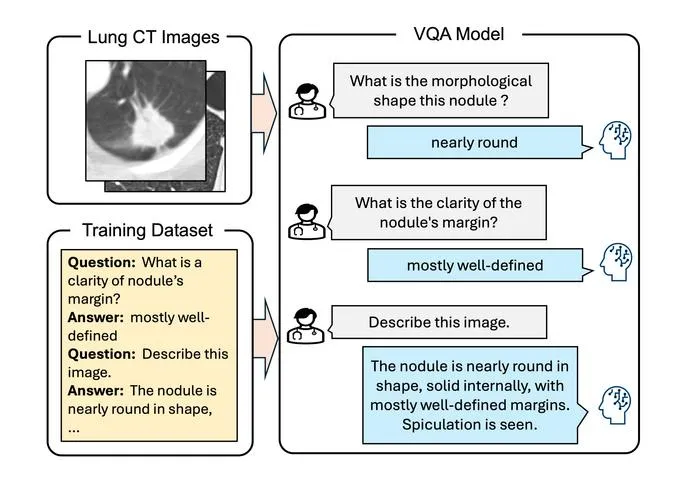
Researchers developed an interpretable AI model that uses visual question answering to generate detailed diagnostic findings from chest CT scans, aimed at improving lung cancer diagnosis.
Key Details
- 1The system is a vision-language model trained on large, annotated chest CT datasets (LIDC-IDRI).
- 2Unlike conventional AI, it produces natural language findings in response to clinical questions, instead of binary classifications.
- 3Quantitative evaluations show high agreement with reference findings, including a CIDEr score of 3.896.
- 4The approach allows targeted, transparent, and explainable outputs for lung nodule assessment.
- 5The model could reduce variability between radiologist diagnoses and help in training and reporting.
Why It Matters
This advance directly improves the interpretability and usability of AI in radiology, supporting standardization, trust, and education in lung cancer diagnostics. By turning image data into interactive, clinician-driven findings, the tool is poised to make AI more practical for real-world CT interpretation.

Source
EurekAlert
Related News
•EurekAlert
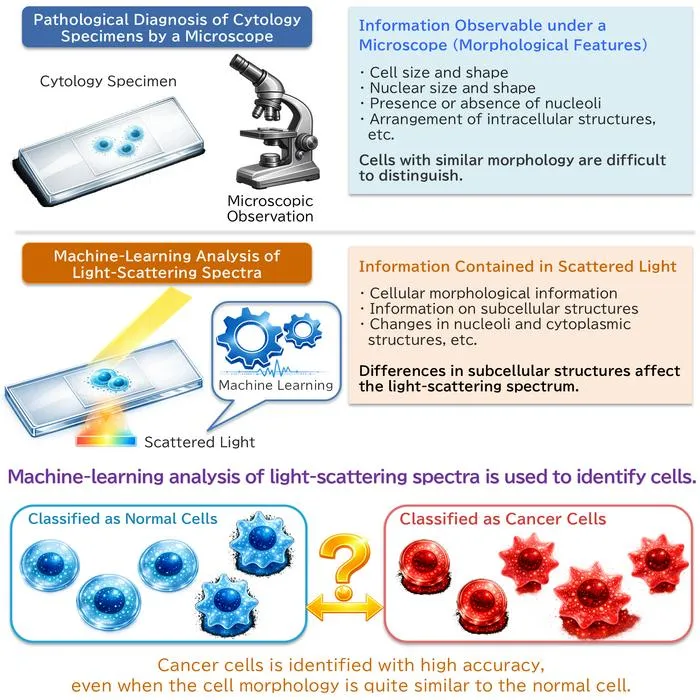
AI System Enhances Cancer Cell Detection via Light Scattering Spectra
Japanese researchers developed an AI system using light scattering spectra to improve cancer cell identification in cytology.
•EurekAlert
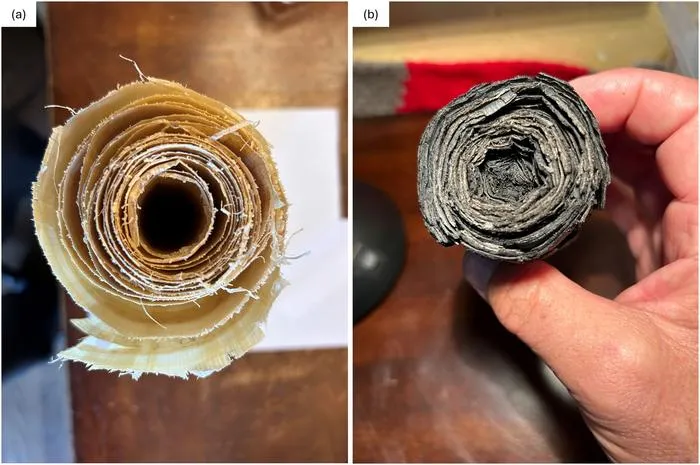
AI and X-ray Imaging Reveal Lost Texts in Ancient Roman Scrolls
AI and x-ray technology enable scientists to virtually read previously unreadable, carbonized Roman scrolls from Herculaneum.

•EurekAlert
AI’s Potential to Expand, Not Shrink, the Clinical Workforce
AI advancements may lead to more, not fewer, healthcare jobs, challenging common fears about workforce reductions in specialties like radiology.