
Back to all news
Multi-Algorithm Machine Learning Model Enhances Exacerbation Risk Prediction in COPD
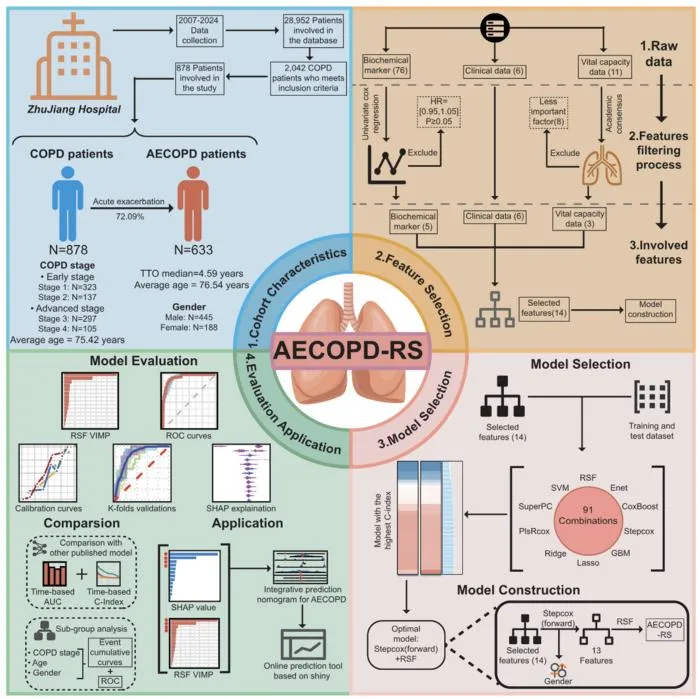
A multi-algorithm machine learning model significantly improves risk prediction of acute exacerbations in COPD patients using multidimensional clinical data.
Key Details
- 1Retrospective analysis included 878 COPD patients with detailed clinical, biochemical, and pulmonary function data.
- 2Ninety-one machine learning models were tested; the best model combined stepwise Cox regression and random survival forest algorithms.
- 3Model training/testing split was 7:3; validation included ROC analysis, k-fold cross-validation, and subgroup analyses.
- 4Five biochemical, six demographic, and three pulmonary parameters were significant predictors for AECOPD risk.
- 5The integrated model significantly outperformed traditional predictive models (p < .05).
- 6A clinical risk score tool and online prediction platform were developed based on the model.
Why It Matters
Accurate risk prediction for COPD exacerbations can guide personalized disease management and intervention strategies. This research demonstrates the potential of machine learning—possibly applicable to imaging-rich phenotypes—in enhancing clinical prediction models for use in radiology or multidisciplinary care.

Source
EurekAlert
Related News

•EurekAlert
UVA's $4M NIH Grant Backs AI to Optimize Cardiac MRI Therapies
UVA secures $4 million NIH funding to develop GenStrain, an AI model using MRI data to personalize cardiac pacing therapies.

•EurekAlert
Machine Learning Models Predict Cancer Risk with Routine Health Data
Researchers developed machine learning models using routinely collected health data to predict individual risk for 20 common cancers, outperforming traditional methods for several cancer types.
•EurekAlert
AI Deep Learning Model Enhances Echocardiogram RV Assessment and Prognosis
Researchers developed DROID-RV, a deep learning tool that automates right ventricular assessment from echocardiograms, showing strong prognostic links with cardiovascular outcomes.