
Mount Sinai experts will present new research on AI and imaging for lung nodules, sleep apnea, and cardiovascular risk at the ATS 2026 Conference.
Key Details
- 1Mount Sinai researchers are presenting at ATS 2026 International Conference (May 15–20, Orlando).
- 2A deep learning AI model (RADLogics Malignancy Index) was externally validated for malignancy prediction in indeterminate lung nodules using sequential CT-based risk scoring.
- 3Research explores temporal stability and performance drift of deployed AI clinical deterioration prediction models (MEWS++) in hospital workflows.
- 4Machine learning and natural language processing techniques are being applied to sleep apnea and cardiovascular outcomes, including data extraction from EHRs and risk prediction.
- 5Investigators also report on disparities in lung nodule follow-up among never-smokers and propose ML-driven risk stratification models for obstructive sleep apnea.
- 6Emphasis on improving generalizability and real-world translation of AI/ML models in clinical and imaging settings.
Why It Matters
These studies illustrate the rapid expansion and real-world implementation of AI/ML in imaging (especially CT for lung nodules) and related clinical decision support. Their findings have direct implications for enhancing diagnosis, risk stratification, and follow-up in respiratory and cardiovascular disease, crucial for radiologists and the imaging AI community.

Source
EurekAlert
Related News
•EurekAlert
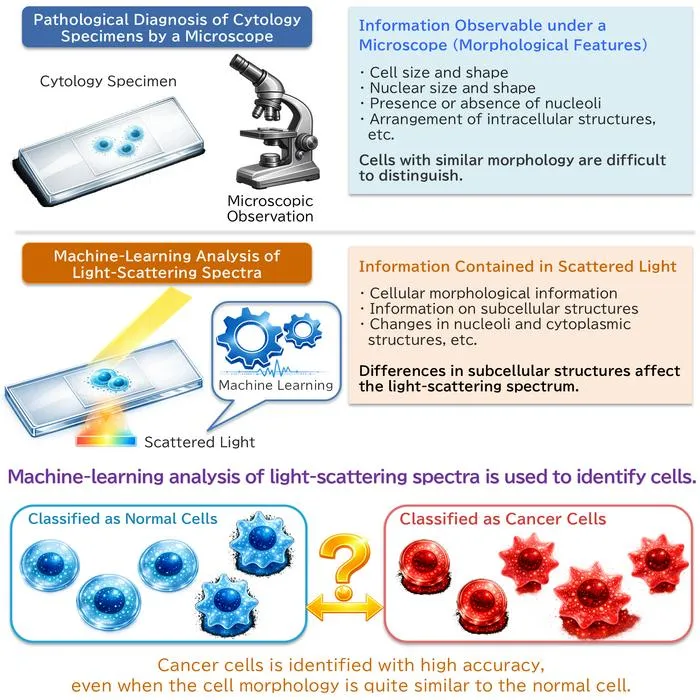
AI System Enhances Cancer Cell Detection via Light Scattering Spectra
Japanese researchers developed an AI system using light scattering spectra to improve cancer cell identification in cytology.
•EurekAlert
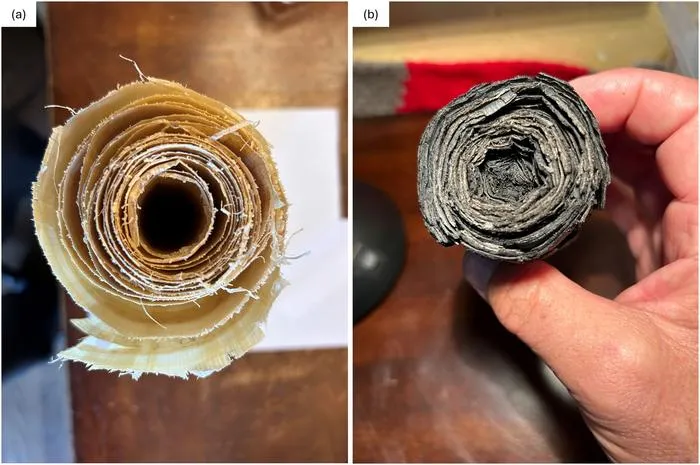
AI and X-ray Imaging Reveal Lost Texts in Ancient Roman Scrolls
AI and x-ray technology enable scientists to virtually read previously unreadable, carbonized Roman scrolls from Herculaneum.

•EurekAlert
NYU AI Model Improves 5-Year Breast Cancer Risk Prediction via 3D Mammograms
NYU researchers developed an AI model using longitudinal 3D mammograms that outperforms single-scan and 2D-based tools in predicting 5-year breast cancer risk.