
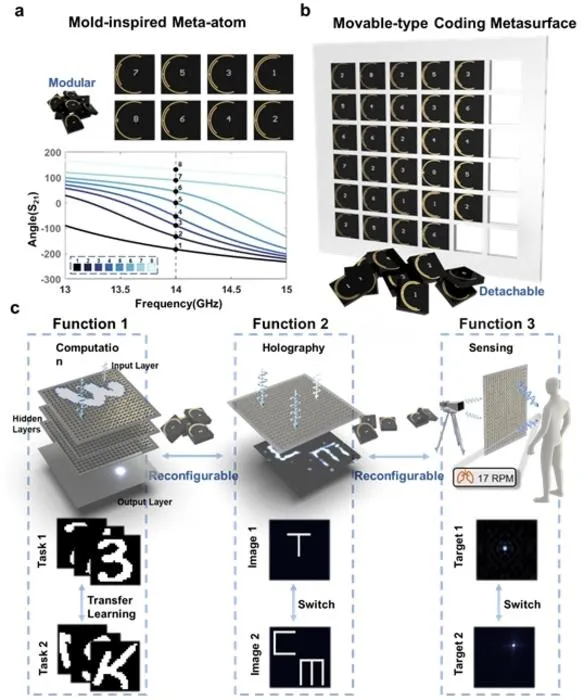
Researchers developed a mechanically reconfigurable metasurface enabling rapid, low-cost adaptation of diffractive neural networks for EM computing and imaging tasks.
Key Details
- 1A movable-type coding metasurface allows post-fabrication reconfiguration using detachable, reusable meta-atoms.
- 2Supports multiple EM functions: computing, holography, and contactless human vital sign sensing.
- 3System achieves efficient task migration and high accuracy by minimal reassembly (unit-level modification).
- 4Reduction in fabrication complexity, cost, and power compared to conventional EM modulation methods.
- 5Demonstrated task transfer: e.g., from digit to letter classification by altering only the final layer.
- 6Potential applications include healthcare monitoring, wireless communications, and intelligent sensing.
Why It Matters
The work introduces a scalable and adaptable hardware platform for imaging and sensing applications, significantly reducing hardware redesign and computational costs. Diffraction-based neural networks capable of rapid reconfiguration could enable more flexible, cost-effective imaging solutions in healthcare and radiology.

Source
EurekAlert
Related News
•EurekAlert
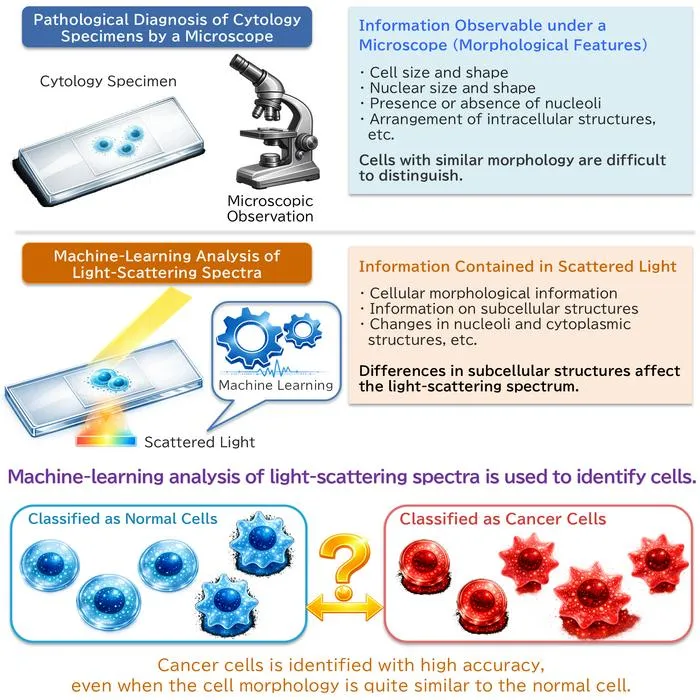
AI System Enhances Cancer Cell Detection via Light Scattering Spectra
Japanese researchers developed an AI system using light scattering spectra to improve cancer cell identification in cytology.
•EurekAlert
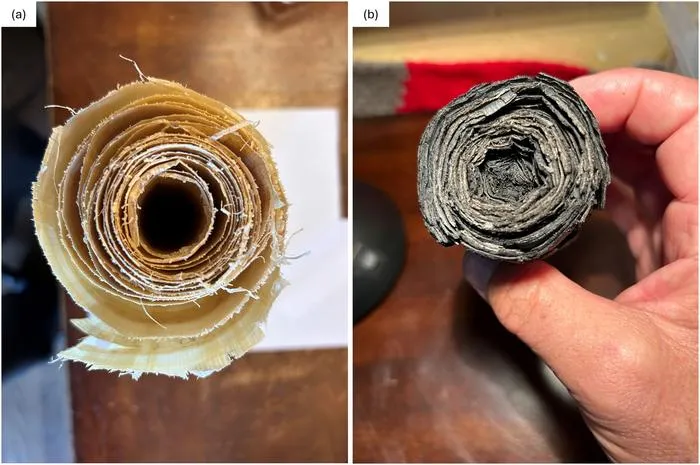
AI and X-ray Imaging Reveal Lost Texts in Ancient Roman Scrolls
AI and x-ray technology enable scientists to virtually read previously unreadable, carbonized Roman scrolls from Herculaneum.

•EurekAlert
AI’s Potential to Expand, Not Shrink, the Clinical Workforce
AI advancements may lead to more, not fewer, healthcare jobs, challenging common fears about workforce reductions in specialties like radiology.