
Back to all news
LSTM Deep Learning Enhances Optical Sensing for Biochemical and Medical Applications
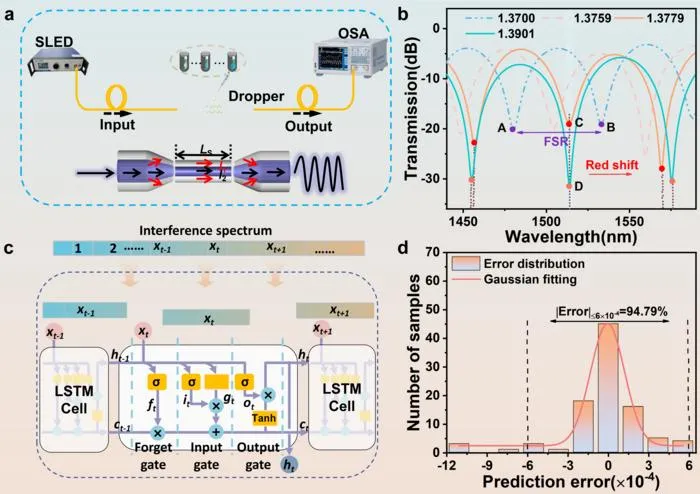
Researchers have developed an LSTM-driven interferometric sensing system that achieves both high sensitivity and wide measurement range, overcoming previous trade-offs in optical sensing.
Key Details
- 1The LSTM model allows for accurate refractive index measurement beyond the free spectral range (FSR) limitation in optical interferometers.
- 2System architecture includes broadband light source, specially fabricated single-mode fiber, and spectral analyzer.
- 3Deep learning enables direct mapping of complex spectra to target measurements despite spectral overlap, tripling the detection range while retaining sensitivity.
- 4Efficient down-sampling reduces data acquisition and processing, making rapid, practical deployment feasible.
- 5Application relevance spans physics, chemistry, biology, and medicine—enabling real-time, high-precision monitoring in complex environments.
Why It Matters
This breakthrough demonstrates how advanced AI models like LSTM can significantly improve the capabilities of optical sensors used in medical and biochemical environments, potentially influencing future noninvasive diagnostic technologies. It highlights a practical pathway for AI-powered, high-precision sensing systems in challenging measurement scenarios.

Source
EurekAlert
Related News
•EurekAlert
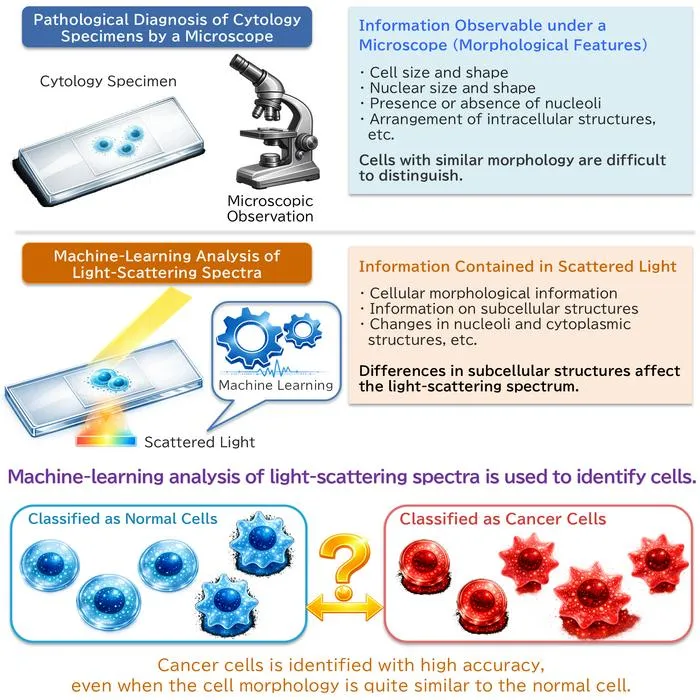
AI System Enhances Cancer Cell Detection via Light Scattering Spectra
Japanese researchers developed an AI system using light scattering spectra to improve cancer cell identification in cytology.
•EurekAlert
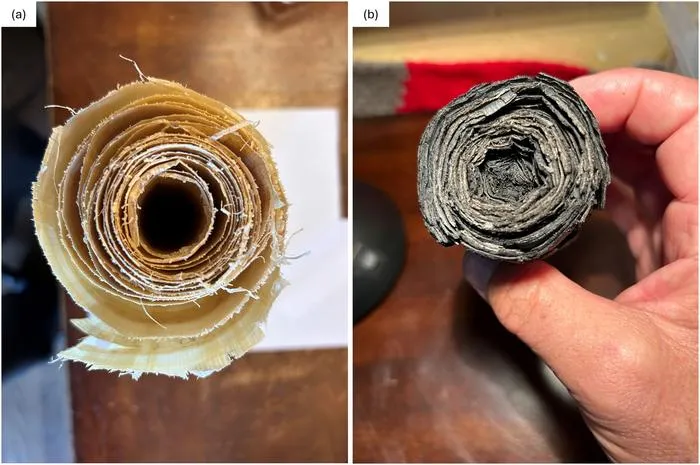
AI and X-ray Imaging Reveal Lost Texts in Ancient Roman Scrolls
AI and x-ray technology enable scientists to virtually read previously unreadable, carbonized Roman scrolls from Herculaneum.

•EurekAlert
AI’s Potential to Expand, Not Shrink, the Clinical Workforce
AI advancements may lead to more, not fewer, healthcare jobs, challenging common fears about workforce reductions in specialties like radiology.