
DeepSeek-V3 and ChatGPT-4o excelled in accurately answering patient questions about interventional radiology procedures, suggesting LLMs' growing role in clinical communication.
Key Details
- 1Study evaluated four LLMs (ChatGPT-4o, DeepSeek-V3, OpenBioLLM-8b, BioMistral-7b) on 107 real-world patient questions covering TAPE, CT-guided HDR brachytherapy, and BEST.
- 2Questions and their answers were independently scored for accuracy by two board-certified radiologists using a Likert scale.
- 3DeepSeek-V3 achieved the highest mean scores for BEST (4.49) and CT-HDR (4.24), while matching ChatGPT-4o on TAPE (4.20 vs 4.17).
- 4OpenBioLLM-8b and BioMistral-7b scored significantly lower and produced potentially hazardous responses.
- 5LLMs' responses show promise for supporting—but not replacing—comprehensive medical consultations.
- 6Future studies should include patient feedback and focus on alignment with clinical guidelines.
Why It Matters
Accurate, scalable patient education via AI could improve understanding and consent for complex interventional radiology procedures, potentially enhancing workflow efficiency and patient outcomes. However, inconsistent model performance highlights the need for careful integration and validation.

Source
AuntMinnie
Related News
•Radiology Business
Real-World Study: Radiology AI Best in Emergency and Inpatient Settings
A commercial AI tool for intracranial aneurysm detection outperformed in inpatient and emergency settings but yielded limited benefits for outpatients in a major health system study.
•Radiology Business
New Rubric Enhances Safety of AI-Generated Radiology Summaries
Researchers developed a five-factor rubric to assess the safety and quality of AI-generated, patient-friendly radiology report summaries.
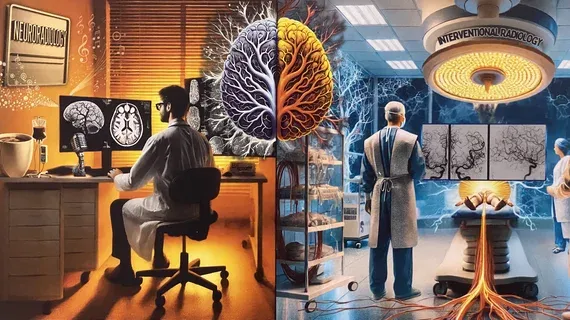
•Radiology Business
Healthcare Leader Warns AI Will Dominate Diagnostic Radiology
A leading oncologist urges future radiologists to specialize in interventional procedures due to AI advances in image interpretation.