
Back to all news
Live Clinical Trial Finds Generative AI Speeds X-Ray Reporting Without Accuracy Loss
A generative AI model integrated into a live radiology workflow increased x-ray report documentation efficiency by 15.5% with no loss in accuracy.
Key Details
- 1Generative AI was prospectively evaluated for drafting plain x-ray radiology reports within a real clinical workflow.
- 2The study involved 122,411 x-ray studies from November 2023 to April 2024.
- 3AI assistance reduced average documentation time from 189.2 to 159.8 seconds (15.5% improvement).
- 4Clinical accuracy (p=0.41) and textual quality (p=0.06) showed no difference with AI use versus non-AI reports as reviewed in 800 cases.
- 5AI flagged unexpected pneumothorax cases with 72.7% sensitivity and 99.9% specificity among 97,651 studied cases.
- 6Net time savings equaled over 63 documentation hours, potentially reducing required radiologist shifts from 79 to 67.
Why It Matters
Despite previous retrospective analyses, this is the first prospective trial demonstrating that generative AI can both speed up radiology reporting and accurately flag critical findings in a live clinical setting. These findings address global radiologist shortages and indicate real-world benefits from clinician-AI collaboration in diagnostic imaging.

Source
AuntMinnie
Related News

•Radiology Business
Harrison.ai Restructures and Launches U.S. AI-Enabled Teleradiology Venture
Harrison.ai lays off staff amid major restructuring and launches Frontier Radiology, an AI-powered U.S. teleradiology business.

•Radiology Business
Healthcare Leader Warns AI Will Dominate Diagnostic Radiology
A leading oncologist urges future radiologists to specialize in interventional procedures due to AI advances in image interpretation.
•Radiology Business
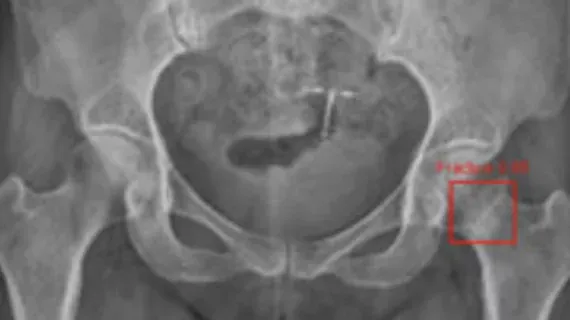
AI Model Surpasses Radiologists in Detecting Subtle Hip Fractures
A new AI model outperformed radiologists in identifying difficult-to-detect femoral neck fractures on radiographs.