
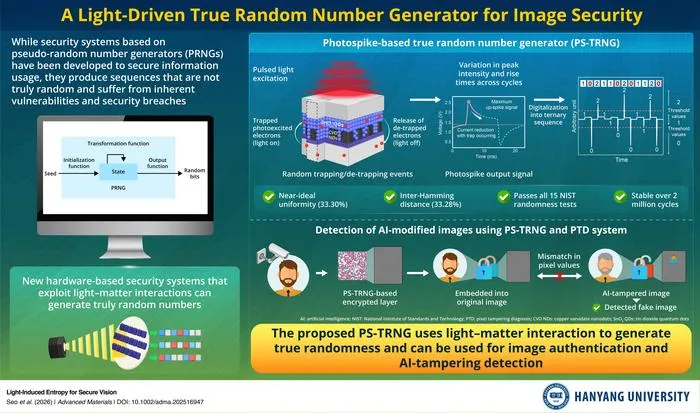
Researchers at Hanyang University developed a light-driven true random number generator for embedding secure signatures into images and detecting tampering.
Key Details
- 1Hanyang University created a photospike-based true random number generator (PS-TRNG) using CuV2O6/SnO2 quantum-dot heterostructures.
- 2The device generates ternary random numbers in real time by exploiting stochastic charge trapping and de-trapping under pulsed light.
- 3Generated random numbers showed stability over 2 million cycles and 460 days, and passed all 15 NIST randomness tests.
- 4Random numbers can be embedded into images as security signatures, allowing detection of image modifications or AI-generated forgeries.
- 5Potential applications include secure medical image authentication and deepfake detection in sensitive domains.
Why It Matters
Embedding hardware-based entropy into image sensors enables pixel-level detection of image tampering and deepfakes at the point of acquisition, enhancing trust, security, and forensic capabilities in radiology and other fields.

Source
EurekAlert
Related News
•EurekAlert
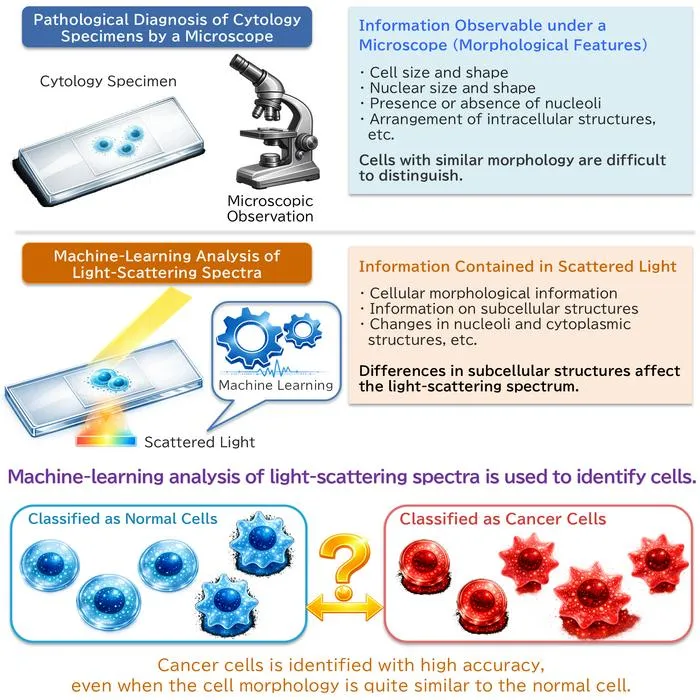
AI System Enhances Cancer Cell Detection via Light Scattering Spectra
Japanese researchers developed an AI system using light scattering spectra to improve cancer cell identification in cytology.
•EurekAlert
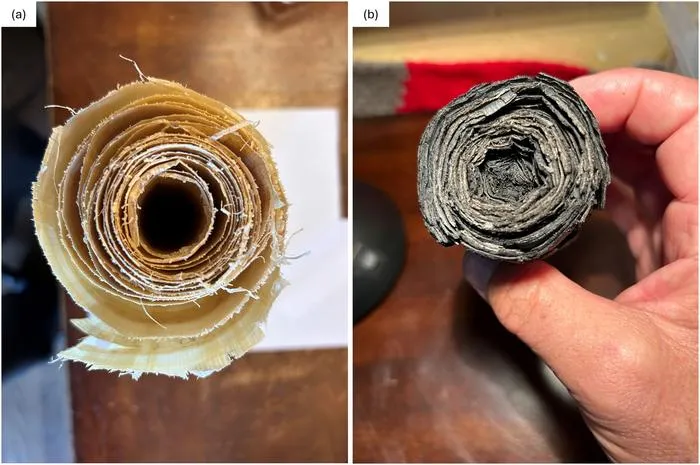
AI and X-ray Imaging Reveal Lost Texts in Ancient Roman Scrolls
AI and x-ray technology enable scientists to virtually read previously unreadable, carbonized Roman scrolls from Herculaneum.

•EurekAlert
AI’s Potential to Expand, Not Shrink, the Clinical Workforce
AI advancements may lead to more, not fewer, healthcare jobs, challenging common fears about workforce reductions in specialties like radiology.