

Researchers have released LazySlide, an open-source tool leveraging AI for advanced, interoperable digital pathology image analysis.
Key Details
- 1LazySlide is an open-source software developed for analyzing digital whole-slide pathology images.
- 2It utilizes foundation AI models to identify patterns, cell types, and tissue changes without extensive manual annotation.
- 3The tool can link visual tissue features with molecular data like RNA sequencing, enabling deeper biological insights.
- 4One notable feature is natural language querying, allowing users to search tissue images using descriptive text.
- 5LazySlide supports 'zero-shot' analysis, identifying tissues or disease states without task-specific training.
- 6Published in Nature Methods on 20 March 2026; funded by the ERC and other European sources.
Why It Matters
LazySlide addresses longstanding challenges in digital pathology, notably data interoperability and linking tissue images with molecular analysis. This democratizes advanced image analysis in pathology, with potential applications in research, diagnostics, and integrating radiology with genomics.

Source
EurekAlert
Related News
•EurekAlert
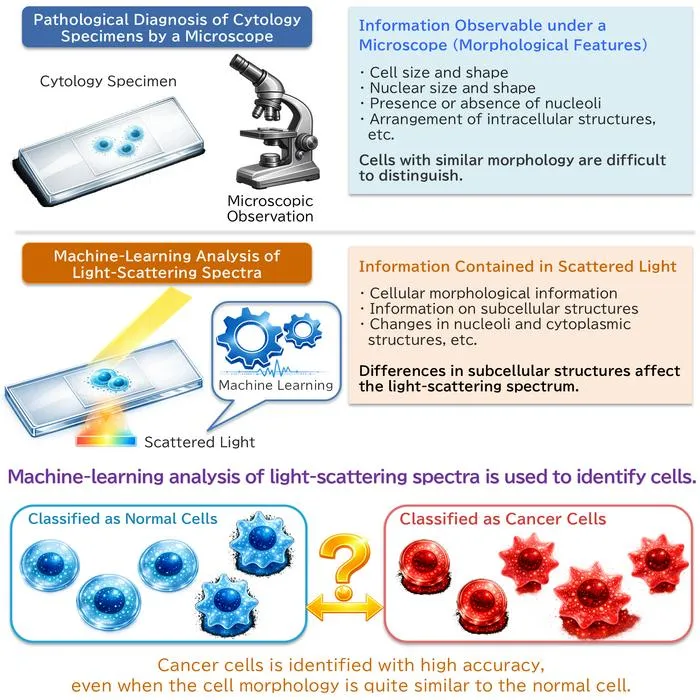
AI System Enhances Cancer Cell Detection via Light Scattering Spectra
Japanese researchers developed an AI system using light scattering spectra to improve cancer cell identification in cytology.

•EurekAlert
AI and X-ray Imaging Reveal Lost Texts in Ancient Roman Scrolls
AI and x-ray technology enable scientists to virtually read previously unreadable, carbonized Roman scrolls from Herculaneum.

•EurekAlert
AI’s Potential to Expand, Not Shrink, the Clinical Workforce
AI advancements may lead to more, not fewer, healthcare jobs, challenging common fears about workforce reductions in specialties like radiology.