
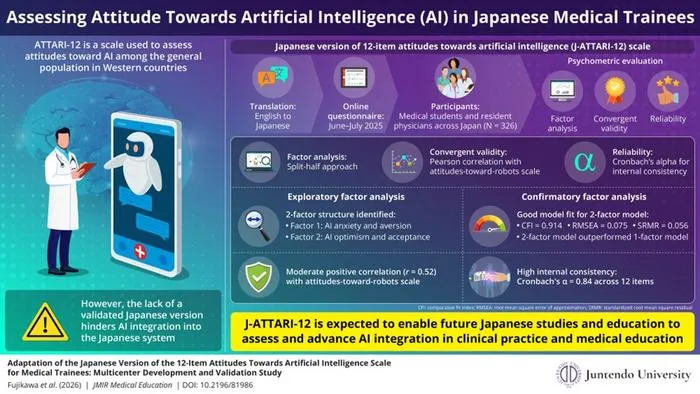
Researchers validated a Japanese version of the ATTARI-12 scale to measure medical trainees' attitudes toward AI in healthcare.
Key Details
- 1The J-ATTARI-12 scale was developed and validated based on a nationwide survey of 326 Japanese medical students and residents.
- 2The scale assesses two dimensions: 'AI anxiety and aversion' and 'AI optimism and acceptance.'
- 3Psychometric evaluation showed good validity, reliability, and model fit.
- 4The tool enables structured assessment of readiness, concerns, and acceptance of AI in medical training.
- 5J-ATTARI-12 will be used in a new 'Medicine and AI' program at Juntendo University from 2026.
- 6Published in JMIR Medical Education on January 14, 2026.
Why It Matters
Understanding medical trainees’ attitudes toward AI is critical for effective curriculum development and the responsible integration of AI into clinical practice. The J-ATTARI-12 scale provides a culturally adapted tool to identify barriers and support the future workforce in adopting AI, including in radiology.

Source
EurekAlert
Related News
•EurekAlert
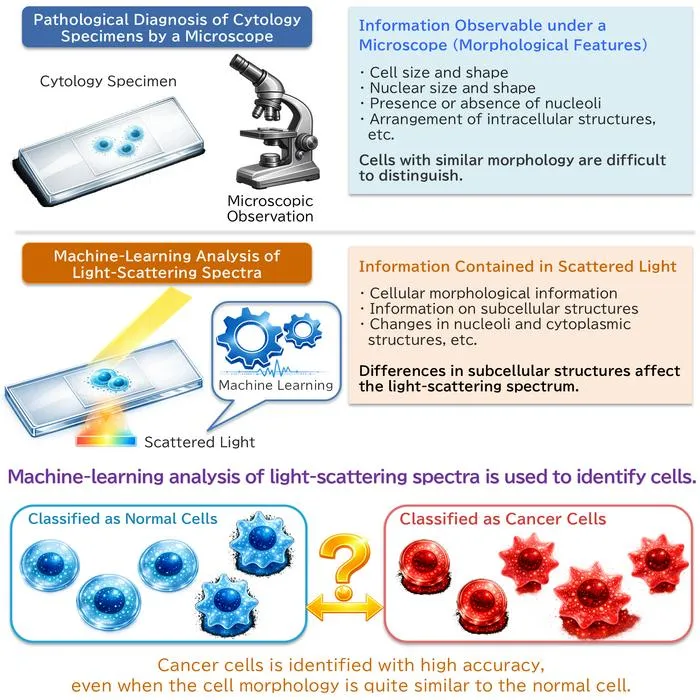
AI System Enhances Cancer Cell Detection via Light Scattering Spectra
Japanese researchers developed an AI system using light scattering spectra to improve cancer cell identification in cytology.
•EurekAlert
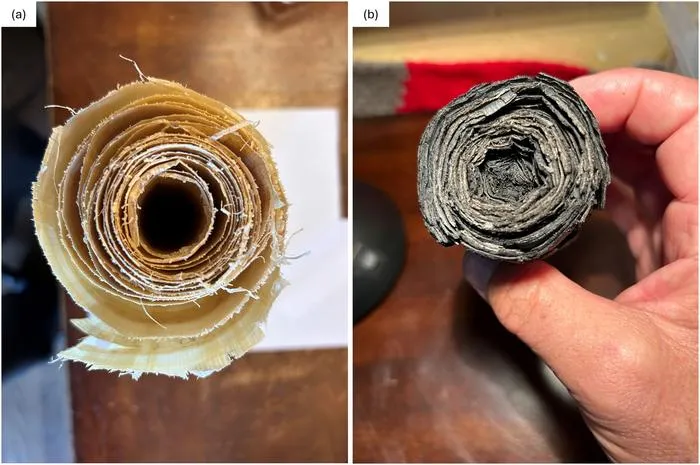
AI and X-ray Imaging Reveal Lost Texts in Ancient Roman Scrolls
AI and x-ray technology enable scientists to virtually read previously unreadable, carbonized Roman scrolls from Herculaneum.

•EurekAlert
AI’s Potential to Expand, Not Shrink, the Clinical Workforce
AI advancements may lead to more, not fewer, healthcare jobs, challenging common fears about workforce reductions in specialties like radiology.