
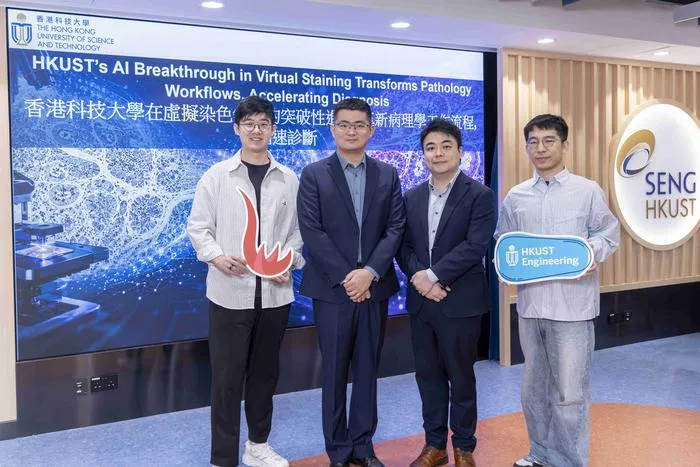
HKUST researchers created a generative AI tool that enables high-fidelity virtual staining in histopathology even with imperfectly aligned training image pairs.
Key Details
- 1Traditional chemical staining in pathology is slow and uses up valuable samples; virtual staining is a promising alternative.
- 2The new GenAI framework (Decoupled Generation and Registration, DGR) separates image generation from spatial registration to accommodate for misalignments in training data.
- 3DGR was validated on five datasets and four stain-related tasks (including virtual H&E, multiplex IHC, and stain normalization).
- 4Pathologists were on average unable to reliably distinguish DGR virtual stains from actual chemical stains (accuracy ~52%).
- 5DGR virtual stains improved downstream AI diagnostic model performance for certain classification tasks (e.g., colorectal polyp, gastric cancer tissue).
- 6Published in Nature Communications on 20-May-2026.
Why It Matters
This GenAI approach addresses a longstanding barrier to deploying virtual staining in real clinical practice by tolerating imperfect alignment in digitized slides. It could accelerate pathology workflows, save tissue, and improve integration of AI in pathology diagnosis.

Source
EurekAlert
Related News
•EurekAlert
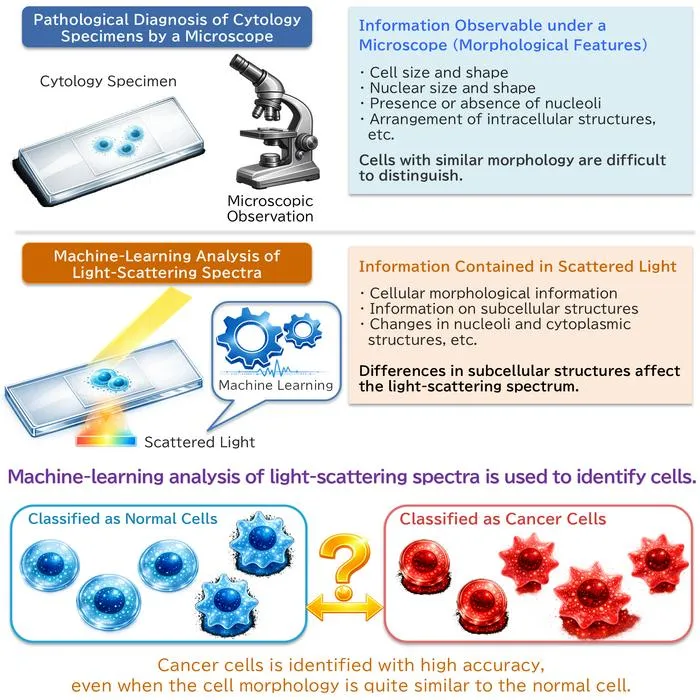
AI System Enhances Cancer Cell Detection via Light Scattering Spectra
Japanese researchers developed an AI system using light scattering spectra to improve cancer cell identification in cytology.
•EurekAlert
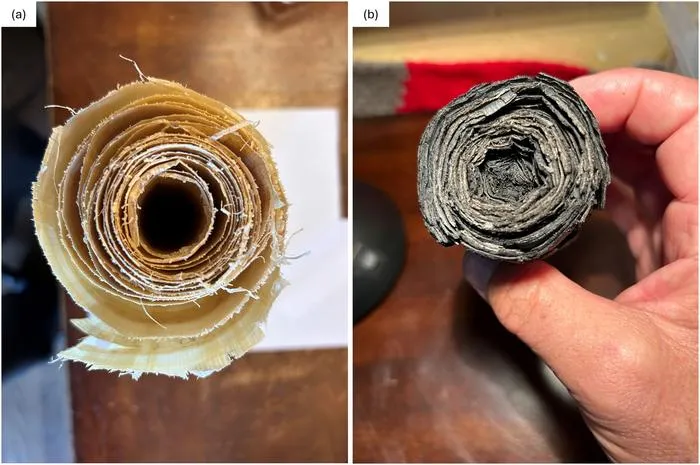
AI and X-ray Imaging Reveal Lost Texts in Ancient Roman Scrolls
AI and x-ray technology enable scientists to virtually read previously unreadable, carbonized Roman scrolls from Herculaneum.

•EurekAlert
AI’s Potential to Expand, Not Shrink, the Clinical Workforce
AI advancements may lead to more, not fewer, healthcare jobs, challenging common fears about workforce reductions in specialties like radiology.