
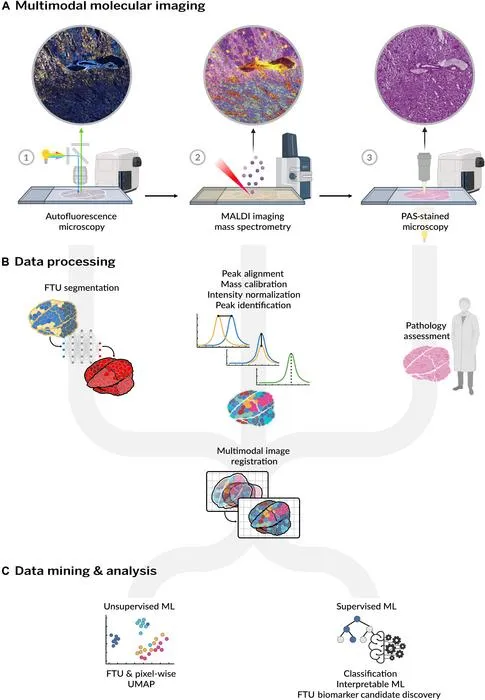
Vanderbilt researchers created the first high-resolution kidney lipid atlas using advanced imaging and machine learning, mapping over 100,000 tissue units.
Key Details
- 1Study published in Science Advances in June 2025 by Vanderbilt and Delft University teams.
- 2Mapped lipid profiles across more than 100,000 functional units in 29 donor kidneys using MALDI imaging mass spectrometry and microscopy.
- 3Applied multimodal registration and interpretable machine learning to co-register and analyze datasets.
- 4Identified molecular signatures tied to specific kidney structures and disease risk factors such as BMI and sex.
- 5Data and analysis tools are publicly available through NIH's HuBMAP program.
- 6Project funded by multiple NIH institutes and the Chan Zuckerberg Initiative.
Why It Matters
This molecular atlas advances the integration of molecular imaging and AI, offering a reference framework for kidney health and disease, which could lead to new diagnostics, therapies, and biologically-informed segmentation for renal pathology and radiomics.

Source
EurekAlert
Related News
•EurekAlert
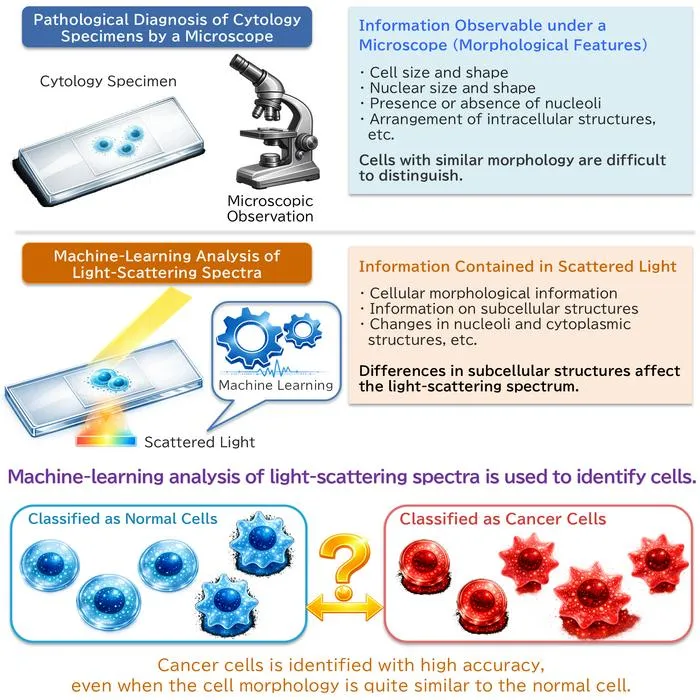
AI System Enhances Cancer Cell Detection via Light Scattering Spectra
Japanese researchers developed an AI system using light scattering spectra to improve cancer cell identification in cytology.
•EurekAlert
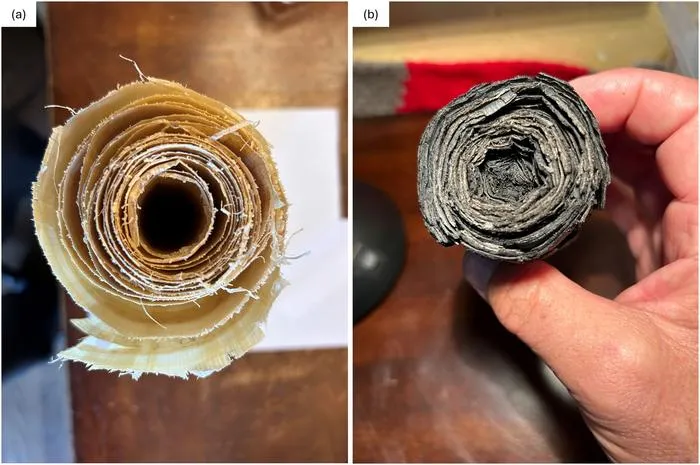
AI and X-ray Imaging Reveal Lost Texts in Ancient Roman Scrolls
AI and x-ray technology enable scientists to virtually read previously unreadable, carbonized Roman scrolls from Herculaneum.

•EurekAlert
AI’s Potential to Expand, Not Shrink, the Clinical Workforce
AI advancements may lead to more, not fewer, healthcare jobs, challenging common fears about workforce reductions in specialties like radiology.